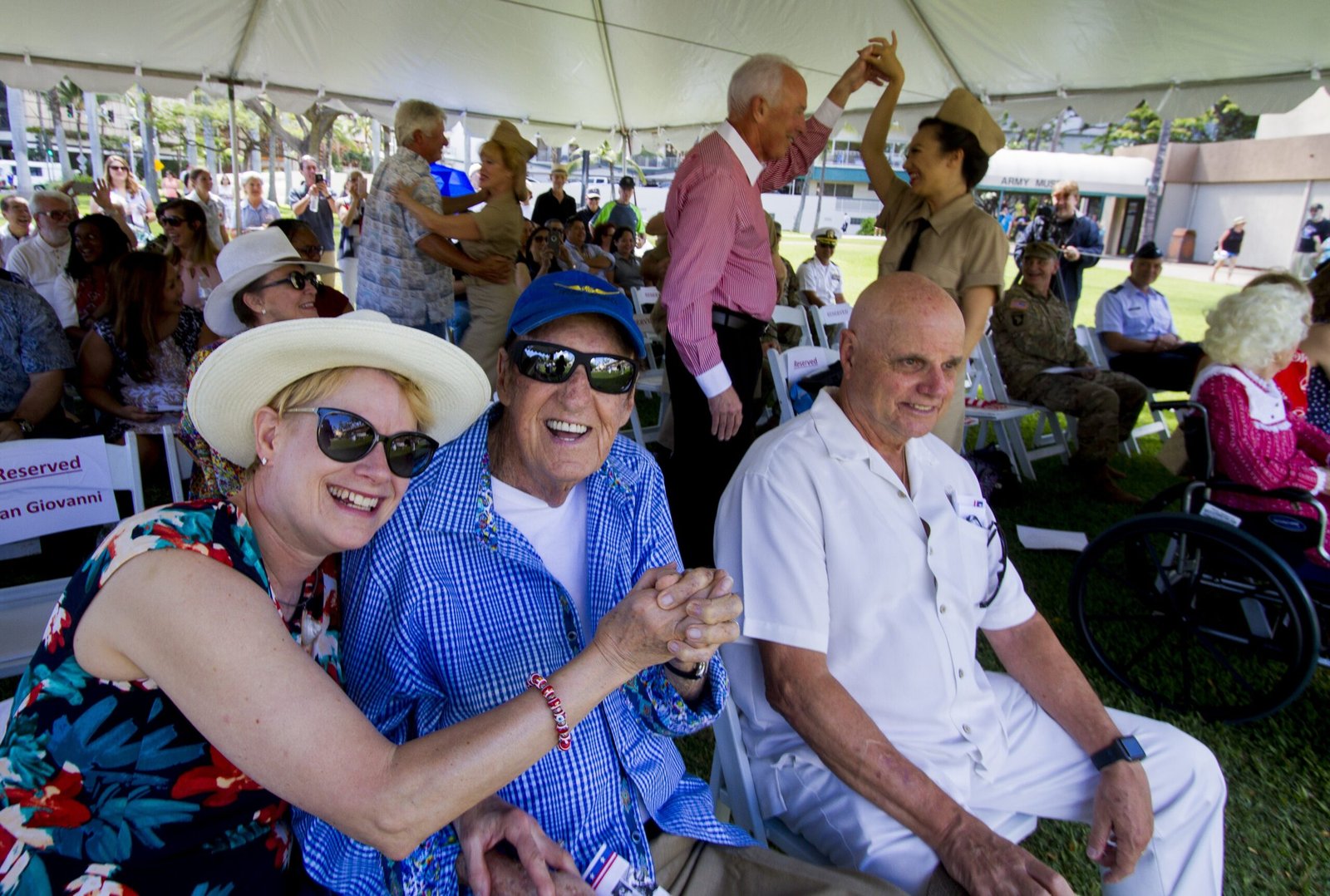
Stan Cadwallader is not a household name, and he has never seemed to want to be one. Yet his life intersects with one of the most recognizable figures in American television history: the late actor and singer Jim Nabors, beloved for “Gomer Pyle, U.S.M.C.” and for a musical career that reached audiences far beyond sitcom fans. Cadwallader’s public visibility has largely come through that connection—first as Nabors’ long-term partner, then as his spouse after same-sex marriage became legal in parts of the United States.
For readers searching for reliable information about Stan Cadwallader, the first thing to understand is that there is only so much that can be confirmed. Cadwallader did not build his identity through media appearances, public social platforms, or a self-authored narrative. The available record is thin by design. What can be responsibly written is a portrait drawn from verifiable milestones: a long relationship conducted mostly out of sight, a marriage that carried cultural weight precisely because it was understated, and a brief moment of public attention surrounding Nabors’ death.
This is an article about what is known, what is not, and why that boundary matters—especially in an era when private people are often pulled into public scrutiny simply because of whom they loved.
Why Stan Cadwallader Draws Public Interest
Interest in Stan Cadwallader tends to surge for a few clear reasons. The first is historical: Jim Nabors was a major American entertainer whose persona was familiar, gentle, and, for decades, carefully separated from his private life. Nabors belonged to a generation of performers who worked in an industry that often demanded silence or strategic ambiguity around sexuality. That silence was not merely personal preference. For many, it was professional survival.
The second reason is legal and cultural: Nabors and Cadwallader married after same-sex marriage began to gain formal recognition in the United States. Their wedding was not a celebrity spectacle; it was notable precisely because it was ordinary—two older adults formalizing a relationship that had already lasted decades. That ordinariness carried a quiet force. It suggested a shift in what could be said aloud, what could be documented, and what could be protected under law.
The third reason is the modern information environment. Search engines, celebrity biography sites, and social media threads often treat a person like Stan Cadwallader as a puzzle to solve. The scarcity of details creates space for rumor. In practice, that means readers who are genuinely trying to learn the basics must navigate a thicket of speculation.
So the search intent behind “stan cadwallader” is typically straightforward: Who is he? How did he and Jim Nabors meet? When did they marry? What happened afterward? The credible answers are fewer than the internet suggests—but they are still worth laying out carefully.
What Is Publicly Known About His Background
Stan Cadwallader has consistently been described in reputable coverage as someone whose primary life and work were not in entertainment. He is often identified as having worked as a firefighter in Honolulu, Hawaii. This detail aligns with the broader understanding of the couple’s life: Nabors, who lived in Hawaii for years, built a home there that became a retreat from Hollywood, and Cadwallader’s employment was rooted in the local community rather than the national stage.
Beyond that, biographical specifics—such as a confirmed birthplace, full early-life history, or educational timeline—are not widely documented in mainstream reporting. Some sites circulate precise birthdates or hometown claims, but those details are frequently unattributed, inconsistent, or drawn from the sort of scraped databases that can replicate errors for years. In the absence of strong sourcing, it is more accurate to say this: Stan Cadwallader’s early life is not part of the public record in a way that meets a reasonable standard of verification.
That is not unusual. It is the norm for private citizens, even those who later become linked to famous partners. The unusual thing is the expectation—common in celebrity culture—that every spouse or partner should come with a full biographical file. Cadwallader’s visibility came through one relationship, not through a public-facing career.
A Relationship Built Away From Cameras
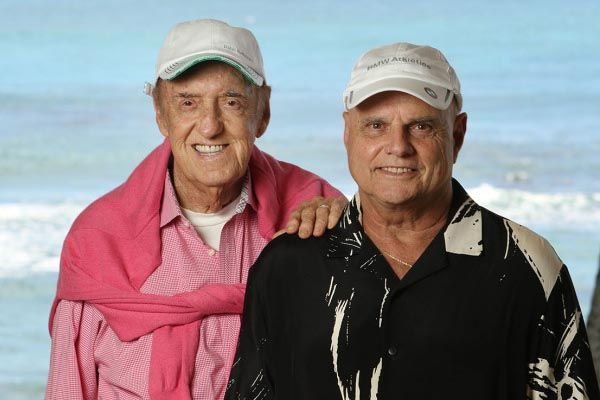
To understand the public interest in Stan Cadwallader, it helps to understand the particular kind of fame Jim Nabors carried. Nabors was not just a performer; he was a familiar presence in living rooms for years. His character Gomer Pyle projected innocence and warmth. Nabors himself also developed a strong reputation as a singer with a rich baritone voice, releasing albums and performing widely, including in Hawaii.
By the time he was an established figure, Nabors had the ability to choose privacy in a way emerging performers often cannot. Over time he spent significant portions of his life in Hawaii. That move mattered. Hawaii offered distance—geographical and cultural—from the entertainment press machinery. It also offered the possibility of living more normally, even for someone recognizable.
It is generally reported that Nabors and Stan Cadwallader met decades before their marriage and remained together for a long time. Coverage has described their partnership as spanning many years—often characterized as several decades—before they became legal spouses. The couple themselves did not perform their relationship for the public. There were no publicity tours as a pair, no coordinated interviews designed to “tell their story” in a marketable arc.
From a journalistic perspective, that choice is the story as much as the relationship itself. In a time when celebrity partnerships can become content—managed, monetized, and continuously updated—Stan Cadwallader and Jim Nabors represent something older: a commitment practiced in private, with only occasional confirmation in public.
That privacy was also shaped by context. When older LGBTQ Americans formed long-term partnerships in the 20th century, discretion was often woven into daily life. Even when secrecy was not absolute, openness carried consequences: job discrimination, social exclusion, legal vulnerability, and, for public figures, career risk. For many couples, the goal was not invisibility for its own sake; it was stability.
The Legal Meaning of Their Marriage
The most widely reported public milestone involving Stan Cadwallader is his marriage to Jim Nabors. Their wedding took place after same-sex marriage became legal in Washington State, which began allowing such marriages in late 2012. Nabors and Cadwallader married in early 2013 in Seattle.
That date matters for more than trivia. It places the marriage at a specific moment in American legal history: a period when marriage equality existed in a growing number of states but not across the country. For many couples—especially older couples—the decision to marry during that window was both practical and principled. Marriage offered legal protections that had been unavailable for most of their adult lives: clear spousal recognition in medical settings, inheritance rights, and a strong legal framework around property and decision-making.
It is easy, in hindsight, to talk about same-sex marriage as an inevitable outcome of cultural change. It was not. The early 2010s were still a contested era, with shifting laws, ballot measures, court challenges, and uneven recognition from one jurisdiction to another. Against that backdrop, the decision by a well-known entertainer and his long-term partner to marry was more than a personal step. It signaled confidence that the legal ground beneath them was changing.
Just as important is how the couple handled the moment. There was no attempt to transform the wedding into a media event. Nabors confirmed the marriage to the press, and the story traveled widely because of who he was. But the tone remained restrained. It was treated, largely, as a private decision that carried public resonance.
For people searching “stan cadwallader” today, this marriage is often the key fact they already half-know. What tends to be missing is why it mattered: not as a celebrity headline, but as a marker of how legal recognition reached couples who had already spent decades together.
Life in Hawaii: Work, Community, and the Choice to Stay Private

Because Stan Cadwallader is so closely associated with Jim Nabors, there can be a tendency to view him only as an appendage to celebrity. That framing is misleading. The public picture that emerges is of an adult who had his own working life and routines, largely outside the entertainment sphere.
Honolulu, where Nabors lived for years, is often referenced in relation to Cadwallader’s reported firefighting career. In a city like Honolulu, public service jobs such as firefighting can carry a particular kind of local respect—recognition that is not fame, but is rooted in community.
The contrast is instructive. Nabors’ face and voice were widely known; Cadwallader’s life was presumably known more intimately within the circles of neighbors, coworkers, and friends who did not need a television résumé to validate a person. Their home life, by most accounts, was anchored far more in local routine than in Hollywood glamour.
This helps explain why detailed anecdotes about Stan Cadwallader are scarce. People in public service roles often have clear professional boundaries. And couples who value privacy tend to cultivate it: fewer public appearances, fewer statements, fewer opportunities for the media to demand a narrative.
It also explains why many online profiles of Stan Cadwallader become repetitive. When there is limited reporting, secondary sites recycle the same fragments: “firefighter,” “partner,” “married in 2013,” “lived in Hawaii.” The temptation is to pad those fragments with invented color. Responsible writing resists that impulse.
Partnership in Later Life: The Unseen Work of Caring
For any couple together over decades, the later years tend to bring practical realities to the forefront: health concerns, medical decisions, the maintenance of a home, and the day-to-day responsibilities that are rarely visible to outsiders. Jim Nabors had well-known health challenges, including a liver transplant in the 1990s, which he discussed publicly in broad terms over the years.
It is reasonable to assume that a long-term partner like Stan Cadwallader played a major role in Nabors’ day-to-day life, as spouses typically do—especially as people age. But it is also important not to overstate what is known. The couple did not publicly detail caregiving arrangements, private medical decisions, or the division of responsibilities at home. The work of care often remains undocumented precisely because it is intimate.
What can be said, without drifting into speculation, is that the legal status of marriage can matter most at the exact moment privacy is most desired—during illness, hospitalization, and end-of-life care. Legal spouses have clear standing in ways unmarried partners historically did not. For older same-sex couples, marriage could function as a form of protection against bureaucratic doubt: access in medical settings, authority in decision-making, and recognition by institutions that might otherwise defer to biological relatives.
In that sense, the marriage between Stan Cadwallader and Jim Nabors reads not only as a symbolic act but as a practical one. It likely helped ensure that a relationship built in private would be respected in the moments when privacy is hardest to maintain.
After Jim Nabors’ Death: Public Grief and Brief Visibility
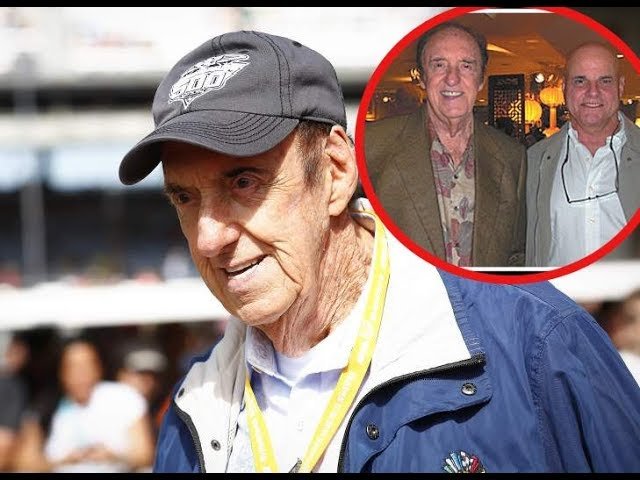
Jim Nabors died in late 2017 at his home in Honolulu. As often happens when a beloved entertainer dies, the news moved quickly, and attention turned to the surviving spouse. In that moment, Stan Cadwallader became visible to many people for the first time—not because he sought attention, but because the world was learning how Nabors’ private life had been formally recognized.
Cadwallader issued a brief statement at the time, confirming the death and expressing personal grief. The statement was widely reported and notable for its simplicity. There was no attempt to manage a legacy, no extended memoir-like reflection released to the public. It conveyed what such statements often convey: that the loss was not primarily an event in entertainment history, but a personal rupture.
This period also tends to prompt questions about estate matters, property, and inheritance. Readers searching for “stan cadwallader” often want to know what happened afterward, as if a celebrity death automatically produces a public accounting of assets and legal details. In reality, most estate administration occurs quietly, and many of the specifics are not made public unless disputes arise or documents become part of open court records. The absence of sensational reporting itself suggests a relatively orderly process, but it would be inappropriate to present that as confirmed fact.
What is fair to note is that legal marriage changes the default framework of inheritance and next-of-kin status. In earlier decades, long-term same-sex partners could face painful legal uncertainty after a death, especially if family members challenged their standing. By 2017, the legal landscape had shifted significantly in the United States. A surviving spouse like Stan Cadwallader was not merely “a partner” in social terms; he was a spouse in the eyes of the law.
For many couples, that difference is the difference between security and vulnerability.
Why So Many Profiles Get Stan Cadwallader Wrong
A search for stan cadwallader yields a familiar pattern: short bios that repeat the same handful of claims, sometimes embellished with details that are hard to source. This is not unique to Cadwallader. It is a broader feature of online celebrity-adjacent coverage, where volume and speed often matter more than verification.
The most common errors fall into a few categories:
First, false precision. Some sites present exact dates, hometowns, and personal history as if they were public record, even when those details do not appear in reputable reporting. Once published, such details can be copied across dozens of pages until they appear “confirmed” by repetition.
Second, sensational framing. A quiet relationship becomes a storyline. Privacy becomes “mystery.” A lack of interviews becomes “secrecy.” This kind of framing attracts clicks, but it distorts reality. Many people are private not because they are hiding wrongdoing, but because they prefer a normal life.
Third, misattributed quotations. In the rush to make a page feel authoritative, some sites assign quotes without clear sourcing. Readers should be skeptical of any “exclusive” remarks attributed to Stan Cadwallader unless they can be traced to a credible outlet with clear editorial standards.
The remedy is not complicated, but it requires discipline: prioritize primary statements, mainstream reporting, and consistent documentation. Where information is not available, say so. If a person has not chosen to live publicly, the absence of details is not an invitation to fabricate them.
The Broader Story: What Stan Cadwallader Represents
It is possible to treat Stan Cadwallader as a footnote in Jim Nabors’ biography. That would be easy, and it would be incomplete.
Cadwallader’s significance lies in what his public invisibility reveals about the era he and Nabors lived through. For decades, many same-sex couples built lives that were structurally similar to any other long-term partnership—shared homes, shared responsibilities, shared social circles—while lacking the legal structures that heterosexual couples could access with a courthouse visit. They created private stability in a public world that did not fully recognize them.
When those couples later gained the ability to marry, the meaning could be layered. It might be romantic. It might be political. It might be administrative—an effort to secure legal protections. Often it was all three at once. In the case of Nabors and Stan Cadwallader, the marriage read as a calm acknowledgement of a long-established reality rather than a dramatic change in course.
There is also an important generational dimension. Much of the public narrative around LGBTQ visibility has focused on youth, activism, and cultural disruption. Those stories are vital, but they can unintentionally obscure older LGBTQ people whose lives were shaped by different constraints. A couple formalizing their relationship in their later years does not make headlines in the same way as a young celebrity coming out. Yet, historically, it may be just as telling. It signals endurance.
In that light, Stan Cadwallader becomes part of a larger American story: the shift from private workaround to public recognition, from informal partnership to legal spouse, from tolerated silence to the right to be named.
The Media Ethics of Writing About a Private Spouse
Any serious profile of Stan Cadwallader has to contend with an uncomfortable question: What do the public “deserve” to know about someone who did not seek fame?
A journalist’s answer should begin with proportionality. The public has a legitimate interest in understanding major cultural and legal milestones—such as a prominent entertainer entering a same-sex marriage at a time when those marriages were still newly recognized. The public also has a legitimate interest in accurate reporting around a public figure’s death.
But the public does not have an inherent right to every personal detail about the surviving spouse. The ethics are clearer when the person in question has not used the relationship to launch a public career, sell a product, shape public policy, or seek influence. Stan Cadwallader does not appear to have done any of that. His footprint in public life is minimal, and that appears to be intentional.
The risk of overreach is not only moral; it is practical. When writers strain to produce “new” information where little exists, they often end up laundering rumor into apparent fact. Over time, that can harden into a false biography that is difficult to correct.
A more responsible approach is to write about Cadwallader in a way that honors what is verifiable and places it in context: a long-term partner, a spouse, a private citizen whose life intersected with a public figure at a moment when the law finally caught up to lived reality.
What Readers Usually Want to Know—and What Can Be Answered
Most readers arriving at a page about stan cadwallader are looking for a clear, grounded summary. Here is what can be answered without drifting into unsupported claims.
Stan Cadwallader is best known as the long-time partner and eventual husband of Jim Nabors. Their relationship lasted many years before they married. They married in 2013, after same-sex marriage became legal in Washington State, and the marriage was reported widely because of Nabors’ fame. The couple lived a largely private life, much of it based in Hawaii. After Nabors died in 2017, Cadwallader issued a brief public statement confirming the death.
Beyond those points, details become harder to substantiate. Readers may encounter claims about Cadwallader’s early life, precise age, or personal history. Some may be true; some may not be. The key is whether the information is supported by credible reporting or direct public record. If it isn’t, it should be treated as unconfirmed.
This is not evasiveness. It is accuracy. In an environment flooded with low-quality biographies, acknowledging the limits of the record is part of telling the truth.
The Quiet Legacy of Stan Cadwallader
Legacies are often assigned to people who never asked for them. Stan Cadwallader’s legacy, such as it is visible to the public, is inseparable from the way he and Jim Nabors lived: not loudly, not performatively, but with commitment that outlasted the era that first made it difficult.
It can be tempting to read the couple’s story as a simple arc—from secrecy to openness, from private to public. Real life is rarely that clean. Privacy is not always the same as hiding. Silence is not always shame. For some people, especially those shaped by older cultural norms, dignity means refusing to turn the most personal parts of life into public property.
At the same time, the fact of their marriage is undeniably part of social history. It placed a familiar American entertainer within the legal transformation of marriage equality, and it did so without spectacle. In a culture that often registers change only when it is loud, the Nabors-Cadwallader marriage was proof that change can also arrive quietly—through ordinary acts carried out by people who have already done the hard work of living.
Stan Cadwallader remains, in public terms, a man defined by restraint. That restraint is not a lack of story; it is the story. It speaks to a life lived outside the economy of attention, and to a relationship that did not require an audience to be real.
Conclusion
Stan Cadwallader is known to the public primarily through his relationship with Jim Nabors: a long-term partnership that eventually became a legal marriage in 2013 and remained largely out of the spotlight. The most reliable facts about Cadwallader are few but meaningful—rooted in public reporting around the marriage and Nabors’ death in 2017, and in the broader understanding that the couple built a private life, much of it in Hawaii, away from the entertainment industry’s constant glare.
For anyone searching for stan cadwallader today, the most honest account is one that resists invention. The available record does not support an expansive personal biography, and it does not need to. Cadwallader’s significance lies less in the details that gossip culture wants and more in what his life alongside Nabors illustrates: the long arc from private commitment to legal recognition, and the quiet ways that social change becomes real in individual lives.