

The phrase “theodore barrett press secretary” has a peculiar afterlife on the internet. People run into it in comment threads, in screenshot-style quote graphics, in reposted “fact” accounts, and sometimes in heated arguments where a single line—attributed to a government spokesperson—gets treated as proof of some larger political truth. The trouble is that the more confidently the attribution circulates, the harder it becomes for ordinary readers to tell whether they are looking at history or at a made-to-go-viral fabrication.
If you searched for theodore barrett press secretary hoping for a straight biography—dates, administrations served, transcripts, and coverage—you are not alone. But the search itself points to a deeper issue: how easily official-sounding claims can spread without the basic scaffolding that real public record leaves behind. This article does two things at once. It explains what a press secretary is and how the job really works, and it examines why the name “Theodore Barrett” is so hard to pin down in any credible, primary source trail—especially when compared with the paper and video footprint that genuine, senior press secretaries inevitably generate.
This is not an attempt to score points or to “debunk” for sport. It is a guide to understanding the role, reading the record, and protecting yourself from the kind of ambiguity that misinformation thrives on.
Why “theodore barrett press secretary” keeps resurfacing
Search terms don’t become popular by accident. In this case, the recurring interest in theodore barrett press secretary appears to be driven less by archival curiosity and more by circulation patterns that are familiar to anyone who has watched a dubious quote go viral.
A typical path looks like this: an image or post attributes a provocative statement to a “press secretary,” provides a full name that sounds plausible, and omits the basics that would allow verification—no date, no outlet, no transcript, no video, no full context, sometimes not even the name of the administration. That omission is not a minor flaw; it is the feature that makes the claim portable. If you can’t check it quickly, you either accept it because it fits your expectations, or you reject it because it doesn’t. Either way, engagement grows.
The choice of job title matters. “Press secretary” implies proximity to power and access to the unguarded thinking of an administration. It suggests the quote is not merely an opinion, but an official window into state behavior. And the name “Theodore Barrett” has the advantage of sounding ordinary enough to be real and specific enough to seem searchable. Many viral falsehoods use this same design: not a nameless “official,” but also not a widely recognizable public figure whose résumé would be easy to confirm.
That is one reason theodore barrett press secretary has become a persistent query. People are trying to determine whether the name is connected to a real person, a real job, and a real moment—or whether it is the sort of invented authority that the internet routinely manufactures.
What a press secretary actually is (and why the role leaves a trail)
Before getting into the name itself, it helps to clarify what “press secretary” means. The term is used in a few different settings, and those differences can muddy searches.
At the top of the visibility ladder, especially in the United States, “the Press Secretary” typically refers to the White House Press Secretary—the public-facing spokesperson for the president, the person who briefs the press corps, fields questions, and articulates the administration’s position day after day. In other countries, the equivalent role may be structured differently, but the core functions are similar: coordinate messaging, manage information flow, and serve as the most accessible interface between the executive branch and the press.
Then there are press secretaries in a broader sense: agency spokespeople, departmental communications directors, or press officers attached to governors, mayors, members of Congress, military commands, and public institutions. These jobs can be senior or junior; some are household names, many are not.
But here is the important point for readers trying to verify a claim tied to theodore barrett press secretary: genuine senior press secretaries leave an unusually dense public footprint.
A high-level press secretary is tied to:
Regular press briefings (transcripts, video recordings, pool reports).
Contemporaneous reporting (newspapers, wire services, magazine profiles).
Official documents and organizational charts.
Books and memoirs by journalists and insiders.
Public schedules, press releases, and archived statements.
Even if a press secretary is not famous, the institutional habit of recording and reporting creates a trail. That trail can be messy, and it can be incomplete, but it is rarely nonexistent.
This matters because the central question behind the search term theodore barrett press secretary is not only “Who was he?” but also “Why can’t I find what I’d normally find for someone in that job?”
The historical record problem: why the name is hard to substantiate
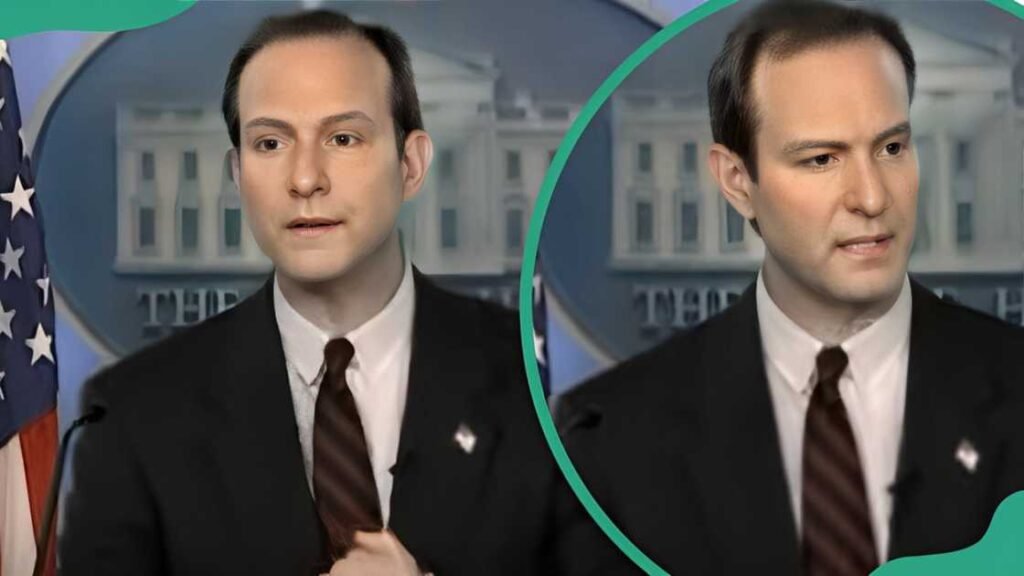
When people ask whether theodore barrett press secretary was a real official, they are typically asking about a high-level spokesperson—often implicitly a White House press secretary—because that is the version of the title that carries the most authority in popular imagination.
Here is the cautious, evidence-based way to describe the situation: the name “Theodore Barrett” does not appear to be widely documented in mainstream, easily verifiable public records as a prominent national-level press secretary in the way that recognized White House press secretaries are documented. That doesn’t prove no one by that name ever worked in communications. It does mean that the most common viral usage—invoking a singular “press secretary” as if the role were a well-known, historically traceable officeholder—does not match how the public record typically looks when the attribution is real.
Why does that distinction matter? Because people routinely conflate “a press secretary somewhere” with “the press secretary,” and those are not the same.
If someone served as a communications aide or press officer in a smaller office—say, at a local level, in a short-term interim capacity, or in a private organization—search results may be thin. But viral attributions rarely present themselves that way. They frame the person as a definitive national spokesperson, as though a simple search should produce a list of briefings, an obituary, or at least a handful of credible news items.
When readers search theodore barrett press secretary, they often find circular references: reposts of the same quote graphic, scraped content, or low-quality pages that repeat the claim without adding primary sourcing. That is not what verification looks like. It is what amplification looks like.
A useful mental test is simple: if the claim were genuine, what would you expect to see? A specific administration. A date. A link to a briefing transcript. A newspaper story naming the spokesperson. A video clip. A reporter’s byline. A correction, if the quote were disputed. The absence of these elements—especially when the quote is inflammatory—is not definitive proof of fabrication, but it is a warning sign strong enough to warrant skepticism.
How fabricated attributions are built to feel “official”
The internet is full of misattributed quotes, but the ones that stick tend to follow a recognizable pattern. Theodore barrett press secretary fits that pattern in ways worth understanding, because the mechanics matter more than the particular name.
A fabricated attribution often uses:
A plausible-sounding full name (common first name, credible surname).
A job title that signals authority but doesn’t require specific institutional detail.
No date, no venue, no transcript.
A statement phrased to confirm a preexisting narrative.
A format designed for reposting: screenshots, “quote cards,” or compressed captions.
This structure creates a kind of rhetorical shortcut. The title “press secretary” suggests the person speaks for power; the full name suggests a traceable identity; the lack of details prevents easy disproof. It is a sweet spot for virality because it invites certainty without requiring evidence.
In real reporting, the opposite is true. Even when journalists quote a spokesperson paraphrasing an administration’s stance, they usually anchor it with context: “in a briefing,” “in a statement,” “responding to questions,” “speaking to reporters,” with enough detail that another reporter could locate the underlying event. That professional norm is not always followed perfectly, but it is common precisely because it is protective: it allows verification, accountability, and correction.
So when you see theodore barrett press secretary attached to a standalone quote with no context, the first question is not “How outrageous is this?” but “Where is the record of him saying it?”
What verification looks like for real press secretaries
One of the clearest ways to evaluate theodore barrett press secretary as a claim is to compare it with how verifiable press secretaries are in practice.
Take well-documented White House press secretaries across different administrations—figures whose names appear in official archives, media coverage, and recorded briefings. Their public record includes searchable briefings, C-SPAN clips, contemporaneous articles, and often interviews long after they left office. Even when they make controversial statements, there is usually a chain: initial report, reaction, transcript, follow-up, and in some cases formal clarification or correction.
That chain exists because the job sits at the intersection of government and journalism, and that intersection produces documentation.
When an attribution lacks that chain, readers are left with “trust me” sourcing. The problem is not only that “trust me” can be wrong; it is that it is indistinguishable from deliberate invention.
This is why the search term theodore barrett press secretary can be so frustrating. People assume that a person described as a press secretary—particularly in a national context—should be easy to confirm. When confirmation fails, confusion grows, and confusion is the oxygen of misinformation.
Possible sources of confusion: similar names, vague titles, and institutional blur
It is also possible for a name like “Theodore Barrett” to be drawn into confusion through coincidence. Communications staffers exist at every level of government, and many never become nationally prominent. It is entirely plausible that there have been individuals named Theodore Barrett working in public relations, media relations, or political communications in various contexts.
But confusion becomes dangerous when a vague, generic title collapses distinctions that matter:
Was this person a White House Press Secretary, a deputy, an assistant, an agency press officer, or a campaign spokesperson?
Was the statement made on-the-record, off-the-record, or is it a paraphrase?
Was it in a briefing, an interview, a press release, an email, a leaked memo, or a private conversation?
Which government, which administration, which year?
Real accountability depends on specificity. Viral posts often strip specificity away, because specificity would allow a reader to check. A quote attributed to “theodore barrett press secretary” without a time and place is effectively a quote without a source, even if it wears the costume of sourcing.
This also points to another common phenomenon: the deliberate use of titles that sound American and official even when the origin of the claim is not American at all. People outside the United States may use “press secretary” as a generic term for any spokesperson. Others may confuse government roles with corporate titles. The ambiguity helps the claim travel across borders and political cultures.
The larger lesson: why your brain wants the claim to be true
The persistence of theodore barrett press secretary is not only a story about bad sourcing. It is a story about how people process information in a crowded, emotionally charged media environment.
Provocative political quotes spread because they do psychological work. They simplify complex events. They offer villains and heroes. They confirm what the reader already suspects about institutions, parties, or governments. They provide a sense of insider access. And they reduce the burden of understanding: you don’t have to read a policy document if a spokesperson supposedly admitted the worst intentions out loud.
The more cynical the quote, the more it flatters the reader’s skepticism. It says: you were right to distrust them.
That is why fabricated attributions frequently target powerful roles—press secretaries, generals, intelligence officials, senior advisors. These titles are psychologically efficient. They imply the speaker knows the truth and let it slip. They also protect the spreader of misinformation from scrutiny, because the average reader doesn’t have time to verify.
If you remember one thing about why “theodore barrett press secretary” continues to circulate, it should be this: the claim is designed to create certainty while withholding the information that would justify certainty.
How to check a claim like “theodore barrett press secretary” without being an expert
You do not need special access to do basic verification. You do need patience and a willingness to treat absence of evidence as meaningful, without turning it into overconfidence.
Start with three questions.
First: What is the specific role being claimed?
If someone is presented as “Press Secretary” in a way that suggests a head spokesperson for a head of government, the documentation should be substantial. If the claim is actually about a minor role, the post should say so. Vagueness is a red flag.
Second: Where and when was the statement made?
Real quotes have coordinates. “In a briefing on [date].” “In an interview with [outlet].” “In a statement released by [office].” If the quote comes with no coordinates, treat it as unverified, even if the person’s name looks plausible.
Third: Is there an independent contemporaneous source?
The gold standard is a primary source: a transcript, audio, video, or an official release. A reputable secondary source—an established news report with attribution—can also help. What does not help is a dozen reposts of the same meme. Virality is not corroboration.
From there, the check becomes practical. If the claim is U.S.-centric and involves a senior spokesperson, you would expect to find corroboration in official archives, major media databases, and recorded briefings. If you find nothing but content farms repeating the phrase theodore barrett press secretary, that is information in itself.
There is also a subtle but important tool: reverse-quote searching. If the same wording appears only in meme formats and not in any dated article or transcript, that suggests the quote may have originated as an internet artifact rather than as a documented statement.
None of this guarantees perfect truth. But it moves you away from emotional acceptance and toward evidence.
What journalists look for when a name doesn’t check out
Professional verification is not magic; it is method. When editors and reporters encounter an attribution like theodore barrett press secretary, they ask questions that can sound almost boring, but boredom is part of the discipline.
They ask whether the person is listed in official rosters. They check whether the office in question existed in that form at the time. They look for contemporaneous mentions—because a press secretary is constantly being quoted, even if only in routine lines like “the office said” or “the spokesperson declined to comment.” They look for press briefing schedules, archived statements, and reporter notebooks. They try to locate the earliest appearance of the quote and see whether it leads back to something real.
And they pay attention to language. Real press secretaries tend to speak in institutional phrasing: careful, lawyered, sometimes evasive, often procedural. Fabricated quotes often read like the internet’s idea of what an official would say—too on-the-nose, too perfectly villainous, too neatly aligned with the moral of the story.
That does not mean officials never say shocking things. They do. But when they do, someone records it, someone reports it, and the record becomes part of the political bloodstream.
The absence of that bloodstream is the central problem with theodore barrett press secretary as it is commonly presented online.
Why the title “press secretary” is uniquely useful to misinformation
Misinformation does not always use made-up names. Sometimes it takes a real person and assigns them fake words. Other times it invents a person whose job title does most of the credibility work.
Press secretaries are particularly vulnerable to this because they are believable conduits for controversial messages. Many people assume press secretaries exist to “spin,” so a cynical or callous quote feels plausible. At the same time, press secretaries are not always household names, which makes it harder for casual readers to spot a mismatch.
The role also lives in a high-noise environment. Every day brings new statements, clarifications, walk-backs, and carefully framed answers. In that fog, a fake quote can hide easily.
This is one reason the search term theodore barrett press secretary can persist even when documentation is thin. The job title makes the claim feel like it belongs in the news cycle, and the name is generic enough to pass a quick sniff test.
The civic cost of getting it wrong
It can feel harmless to share a quote graphic, especially if it aligns with your worldview. But the cost is not only individual misunderstanding. It is civic.
When people accept unverified claims attributed to government spokespeople, several things happen at once:
Public outrage gets directed at potentially fictional targets, which wastes attention that could be directed toward verifiable actions and policies.
Real accountability becomes harder because the conversation is built around a phantom statement rather than documented decisions.
Journalistic institutions lose trust, because people assume “the media hid it” when the real issue is “it likely never happened.”
The boundary between record and rumor erodes, making future verification harder.
In that environment, even true statements can start to feel optional. Everything becomes a vibe. That is a dangerous way to run a democracy, regardless of which side benefits in the short term.
If theodore barrett press secretary is, as commonly circulated, an attribution without a reliable record, then the responsible response is not simply to sneer at gullible people. It is to recognize the vulnerability and strengthen habits of verification.
What to do if you’ve already shared an unverified attribution
People share things quickly. If you once reposted something tied to theodore barrett press secretary and later realized the sourcing was shaky, you are in good company. The correct move is straightforward and does not require drama.
Update the record where you can. If the post is still visible, add a note that you could not find a primary source or credible contemporaneous coverage. If you shared it in a group chat, tell people you’re not confident it’s authentic. If someone asks, explain your reasoning in plain terms: you looked for time, place, transcript, and independent reporting, and you didn’t find it.
This matters because correction is a social act. Misinformation spreads through networks; it is slowed through networks too.
The deeper question: why people want a single quote to do all the work
It is worth stepping back from the particular mystery of theodore barrett press secretary and asking why the internet loves the genre so much. Politics is complicated. Policy is slow. Institutions are bureaucratic. A single quote offers a clean narrative in a messy world.
But real accountability rarely comes from one line. It comes from documents, decisions, budgets, votes, court filings, testimony, and sustained reporting. Press secretaries sit on the surface of that system. They can reveal priorities and tone, sometimes inadvertently. Yet the most important truths about power are usually not hidden in one outrageous sentence. They are visible in patterns.
That is another way to read the entire “theodore barrett press secretary” phenomenon: as a symptom of a media diet that is too quote-driven, too screenshot-dependent, and too impatient with the slow work of evidence.
Conclusion: Treat the name as a starting point, not a verdict
The recurring search for theodore barrett press secretary reflects a genuine desire to check the record. That instinct is healthy. The difficulty is that the name, as it commonly appears online, often arrives attached to claims that lack the minimal details that make verification possible. In the world of real press secretaries—especially senior ones—those details are not optional. They are the difference between history and hearsay.
A press secretary’s job is to speak on the record, manage information, and represent an institution under constant scrutiny. That scrutiny produces documentation. When an attribution offers none, readers should slow down and ask the simplest questions: Who, exactly? Which office? When? Where is the transcript or the contemporaneous report?
You do not have to be cynical to be careful. You only have to demand the kind of specificity that real public life inevitably leaves behind. If the story cannot survive that demand, it should not be shaping anyone’s understanding of what government did or did not say.