
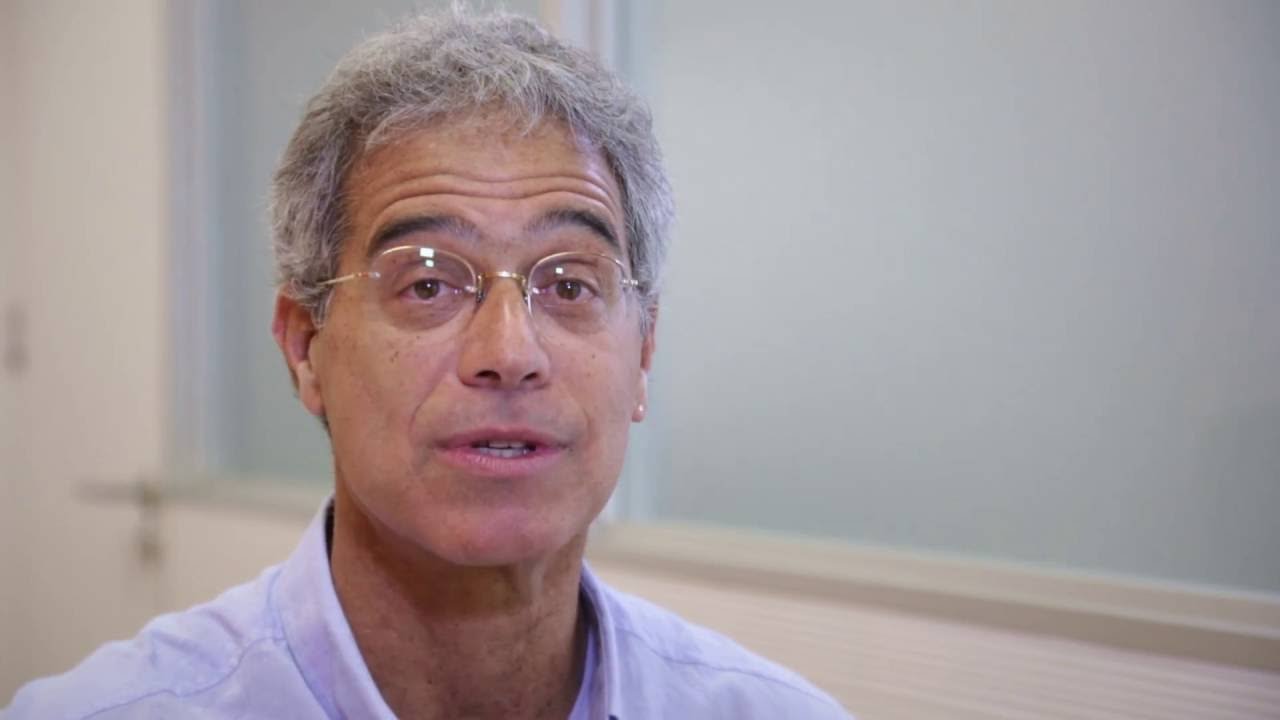
In the crowded landscape of global aid—where emergency appeals compete with policy debates and where short-term relief often overshadows long-term repair—Mitchell Besser has built a reputation for doing something deceptively simple: insisting that survival is not the same as recovery. Trained as a physician and shaped by years of work in public health settings, Besser is widely known for founding No Strings International, an organization that connects women affected by war, trafficking, and displacement with steady, dignified income through textile and craft production.
His story matters not because it offers a neat narrative of one person “saving” others, but because it illustrates a hard truth in humanitarian work: medicine can stabilize a body, but it cannot, by itself, rebuild a life. The problems that follow mass violence—poverty, isolation, stigma, chronic trauma, broken family structures—often outlast the headline events that triggered them. Besser’s work sits at that uncomfortable intersection, where health, economics, and human dignity collide.
This article looks closely at Mitchell Besser’s background, what he set out to do, how the model he helped create works, and why his approach has attracted both admiration and serious questions. It also places his work within a broader shift toward “social enterprise” responses to humanitarian crises—and why that shift is neither a cure-all nor a fad, but an ongoing argument about what justice looks like after catastrophe.
Who is Mitchell Besser?
Mitchell Besser is an obstetrician-gynecologist by training and a global health practitioner by experience. Over time, he also became a social entrepreneur—someone who borrows tools from business (supply chains, product development, markets) to pursue explicitly social aims. His public profile is most strongly tied to No Strings International, which has worked with women in post-conflict and high-vulnerability settings, including in East Africa.
Descriptions of Mitchell Besser often foreground a pivotal transition: the moment when a clinician, used to diagnosing and treating individual patients, confronts the limits of clinical care in places where the deeper illness is structural. In those environments, women may reach a clinic with untreated injuries, complicated pregnancies, sexually transmitted infections, or the physical aftermath of sexual violence. But even when a health worker does everything right, the patient can be discharged into the same insecurity that caused her health to collapse in the first place.
For Besser, that gap—between treating injuries and restoring agency—became the central problem. The question that followed was not purely medical. It was also economic, social, and moral: What kind of support helps a woman build a future when her past includes coercion, violence, or forced displacement?
From clinical care to the wider conditions of survival
It is easy, from a distance, to imagine humanitarian work as a sequence of solutions: first safety, then food and shelter, then schools and jobs. In reality, crises do not line up in orderly stages. People can be physically safe and economically trapped. They can be housed and still socially exiled. They can be medically stable and still at high risk of exploitation.
Physicians working in fragile settings often find themselves addressing symptoms produced by conditions they cannot prescribe away—lack of income, lack of legal status, lack of protection, lack of education, gender-based violence, and stigma. Obstetric and gynecological care makes these links impossible to ignore. Women’s health is not a niche issue; it is a diagnostic lens that reveals power structures. Who controls sex? Who controls pregnancy? Who controls money? Who is believed, and who is blamed?
Accounts of Mitchell Besser’s work emphasize that he encountered women whose lives had been disrupted by conflict and coercion, and that the aftermath was not only physical. Trauma showed up in the social fabric: rejection by families, fear of intimacy, the burden of raising children born of violence, and the punishing economics of being a woman without a reliable livelihood.
What does a “successful” outcome look like in such a context? A clinician might celebrate a safe delivery, a treated infection, or a repaired injury. Those victories matter. But they are not the end of the story. Many women leaving a clinic still face an immediate, grinding question: How will I feed my children tomorrow?
That is the question that pushes some health workers beyond the walls of medicine. For Mitchell Besser, it became a catalyst for building a model focused on income as a form of restoration—not because money erases trauma, but because economic power can reduce vulnerability and expand choices.
The founding idea behind No Strings International
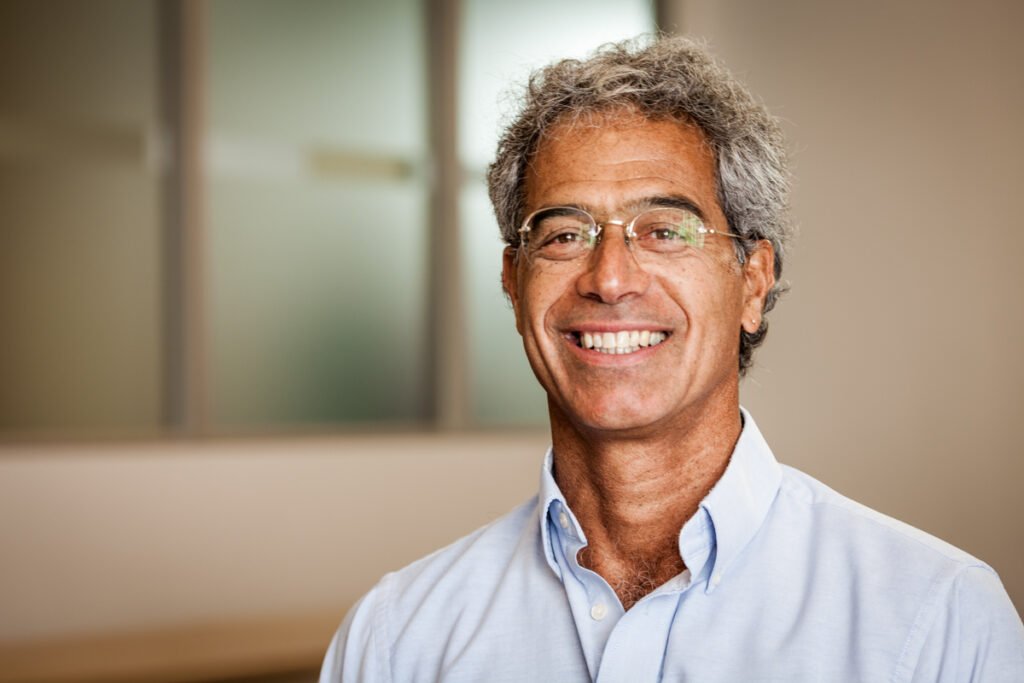
Mitchell Besser is best known as the founder of No Strings International (often referred to as NSI), which describes its core mission in practical terms: supporting women who have survived extreme exploitation by creating pathways to income through the production and sale of handmade goods.
The phrase “no strings” carries an implicit argument about aid. Traditional charity can be lifesaving, but it can also entrench dependency if it offers only consumption with no leverage. A livelihood model, by contrast, tries to provide something that grows: skills, routine, community, and cash earned through work.
NSI has been associated with women affected by armed conflict and trafficking, including women returning to communities where they may be viewed with suspicion or contempt. In some post-conflict settings, women and girls who were abducted or coerced during war have returned with children, injuries, and a level of stigma that limits their access to education, marriage, property, and employment. The consequences can become cyclical, pushing survivors toward precarious labor and increasing their exposure to further violence.
The founding logic behind NSI is that dignified work can serve multiple functions at once:
- Economic stability: regular income to meet basic needs.
- Social reconnection: a workplace that doubles as a community.
- Practical empowerment: skills that outlast any single donor cycle.
- Reduced vulnerability: fewer incentives to accept dangerous work or exploitative relationships.
It is not a magical formula. It is, however, a clear pivot away from treating survivors only as recipients of care. The model treats them as workers, makers, and decision-makers—roles that can be psychologically and socially significant in contexts where a woman’s identity has been defined by what was done to her rather than what she can do.
How the model works in practice
Livelihood projects can be well intentioned and still fail. Many collapse because products have no market, because training is disconnected from real demand, or because “empowerment” is treated as a slogan rather than a system requiring logistics, quality control, safeguarding, and long-term planning.
The model associated with Mitchell Besser and No Strings International has generally been described as combining several components:
Production and training
Women are trained in sewing, knitting, embroidery, and related craft skills, often building from basic techniques to more complex patterns and quality standards. Training is not only about learning a craft; it is also about building consistency—showing up, working in teams, meeting deadlines, and managing income.
A focus on safe spaces
A trauma-informed workplace is not just a room with sewing machines. It needs reliable supervision, respectful norms, and protections against harassment and exploitation. In many settings, women survivors are at heightened risk of coercion, including from people who present themselves as helpers. Any program that gathers vulnerable participants into a worksite must take safeguarding seriously.
Market access
This is where many craft-based interventions either succeed or unravel. It is one thing to teach a skill; it is another to sell the output at a price that sustains wages and operations. Programs that depend solely on sympathy purchases can be unstable. Sustainable market access requires product design that appeals to buyers, predictable quality, and distribution channels that can survive changing trends.
Integration with local partners
Livelihood programs typically intersect with mental health support, legal services, housing, childcare, and medical care. An organization focused on production alone can miss the realities of participants’ lives. Effective models often work alongside local NGOs or service providers to address barriers that keep women from working consistently—like untreated trauma, chronic illness, domestic violence, or lack of childcare.
The “dignity” argument
A consistent theme in reporting on Mitchell Besser’s work is the emphasis on dignity: the idea that survivors should not be forced to continually recount their worst experiences to qualify for assistance. Income earned through work can reduce the need for repeated verification of suffering. That matters because humanitarian systems often require people to narrate their trauma as proof—an ethically fraught practice that can become its own form of harm.
Why an obstetrician would build a sewing enterprise
At first glance, it can sound strange: a doctor building a textile-based livelihood program. But the connection becomes clearer when you see women’s health as inseparable from power and economics.
In many societies, a woman’s ability to protect her health depends on her bargaining position inside relationships and households. Income is not merely purchasing power; it can shape whether a woman can leave an abusive partner, seek medical care, buy contraception, pay for transport to a clinic, or keep her daughters in school.
From that perspective, the move from medicine to livelihood is less of a leap than it appears. It is a shift from downstream intervention (treating injury) to upstream prevention (reducing vulnerability). It also reflects a broader global health understanding: social determinants—income, education, safety—drive health outcomes as much as, and sometimes more than, clinical services.
Mitchell Besser’s work is often cited as an example of what happens when a clinician refuses to accept “discharge” as the end of care. The patient may leave the clinic, but the clinician’s moral attention does not.
The promise and the pitfalls of “empowerment” through work
The word “empowerment” has been stretched thin by overuse. In humanitarian contexts, it can become a convenient label for projects that are small, underfunded, and disconnected from the economic reality on the ground. Serious empowerment is hard. It requires trade-offs, accountability, and patience.
Livelihood programs like the one associated with Mitchell Besser raise important questions that deserve careful scrutiny.
Do these jobs pay enough?
A dignified wage is not only an ethical question but a practical one. If earnings are too small or inconsistent, participants may still rely on unsafe work or exploitative relationships. Transparent wage structures and realistic pricing are crucial. Without them, “job creation” risks becoming symbolic.
Is the work voluntary and safe?
In high-vulnerability groups, coercion can hide behind good intentions. Programs must ensure that participation is genuinely voluntary, that working conditions are safe, and that women can leave without being punished or shamed.
Who controls the narrative?
Survivor-focused projects often attract donor attention through compelling stories. The ethical danger is that women become characters in fundraising narratives, their identities reduced to trauma. A responsible organization must balance public storytelling with privacy, consent, and dignity. The public may want dramatic transformation tales; real recovery is often slower and less linear.
What happens when markets change?
Handmade products rise and fall with consumer trends and global economic conditions. Reliance on Western retail markets can introduce vulnerability: shipping disruptions, inflation, shifting tastes, and competition from cheaper goods. A program that works one year may struggle the next.
Does it strengthen local economies or compete with them?
If an NGO-backed workshop sells goods into local markets at subsidized prices, it can undercut existing artisans. Conversely, exporting crafts can avoid local competition but can create dependence on international buyers. There is no perfect solution—only careful, context-specific choices.
These questions are not criticisms of any one individual. They are the necessary scrutiny applied to any model that claims to replace vulnerability with opportunity. The value of Mitchell Besser’s work, in part, is that it invites exactly this sort of debate: What does ethical livelihood support look like in the wake of violence?
The broader shift: from aid as relief to aid as rebuilding
Mitchell Besser’s name is frequently mentioned in discussions about the evolution of humanitarian practice. For decades, the aid sector has wrestled with a dilemma: emergency relief is essential, but many crises become protracted. Camps and temporary settlements can last years. Displacement can become a semi-permanent condition. Survivors of trafficking and conflict can spend long stretches in limbo—safe from the worst dangers but without a path into stable, self-directed life.
In that environment, a growing number of organizations have experimented with hybrid models that blend charity and commerce:
- Workforce training paired with guaranteed purchase agreements
- Cooperative production models
- Social enterprises tied to fair-trade markets
- Cash-transfer programs that let recipients decide their priorities
- Village savings and loan groups
- Apprenticeships connected to real employers
No Strings International sits within that ecosystem. It is not alone, and it did not invent the idea of craft-based income generation. What distinguishes the Mitchell Besser approach, as it is often described, is the insistence on quality, market viability, and the psychological importance of work that is socially valued rather than purely therapeutic.
That insistence is important because many well-meaning livelihood projects underestimate the discipline required to compete in real markets. When customers pay for an item because it is beautiful and well-made—not only because it carries a story—workers receive a different kind of validation. The product becomes evidence of skill, not simply of survival.
Trauma, time, and the limits of neat success stories
One of the most difficult truths in post-conflict recovery is that trauma is not linear. People can improve for months and then crash. A stable job can be interrupted by a panic disorder, a domestic crisis, a sick child, a relapse into substance use, or renewed violence in the community. Programs that expect constant, uninterrupted progress often end up blaming survivors for “non-compliance” when what they are seeing is the normal turbulence of recovery.
A more realistic model treats stability as something built over time through repeated experiences of safety and control. The workplace can contribute to that, but it cannot carry the full burden. This is why many credible survivor-support models emphasize partnerships: mental health services, community mediation, legal support, and healthcare must often work in tandem.
Mitchell Besser’s public association with both health and livelihoods places him in a rare position: he is linked to a model that acknowledges the body and the broader life around it. That does not guarantee success, but it does align with what trauma research and public health practice have long suggested—recovery depends on more than one intervention.
A closer look at impact: what can be measured, and what cannot
Readers searching for “mitchell besser” often want a straightforward answer to a straightforward question: Did this work “help”? The reality is more complicated, and honest evaluation should be comfortable with complexity.
Some outcomes are measurable:
- Whether participants earn income and how consistently
- School attendance for children
- Retention and graduation rates in training programs
- Productivity, defect rates, and quality benchmarks in production
- Health-seeking behavior, like clinic visits and prenatal care
- Savings and asset accumulation where applicable
Other outcomes matter but are harder to measure:
- Reduction in stigma
- Increased sense of control over life decisions
- Decreased exposure to exploitation
- Repaired family relationships
- Confidence and social participation
A serious discussion of impact also needs to separate individual change from structural change. A workshop may transform a participant’s daily life without altering the conditions that created vulnerability in the first place—corruption, land insecurity, weak legal protections, patriarchal norms, or the economic wreckage of war. Livelihood programs can be an essential bridge, but they are not a substitute for justice systems, economic development, or political stability.
The most credible way to talk about impact is to avoid grand claims and instead focus on what such programs can plausibly do: reduce immediate vulnerability, expand options, and build social and economic footholds. That is significant. It is also not total.
Why the Mitchell Besser model resonates with so many people
Part of the public appeal of Mitchell Besser’s story is that it challenges a familiar caricature of humanitarianism. Instead of centering the rescuer, the model emphasizes the maker. Instead of asking for pity, it asks for respect. Instead of treating survivors as permanently broken, it treats them as capable of producing value that others want.
That framing can be powerful, especially in a world where survivors of violence are often portrayed either as helpless or as inspirational symbols. Both portrayals can be dehumanizing in their own way. The alternative is to portray survivors as full adults living complicated lives—capable of skill, humor, anger, ambition, and contradiction. Work can be one pathway back into that fuller identity.
At the same time, the resonance reflects a hunger for solutions that feel concrete. People want to believe that the aftermath of atrocities is not only misery and bureaucracy. They want to see a lever that can be pulled. A sewing machine, a training program, a paycheck—these are tangible.
The danger is that tangibility can seduce audiences into thinking the problem is solved. The best reporting and the best program design resist that temptation. They show the lever and also the weight it is trying to move.
What to look for when evaluating similar efforts
Even if a reader has no direct connection to Mitchell Besser or No Strings International, the model raises practical questions that apply across the aid sector. For anyone trying to evaluate livelihood-based humanitarian work, several criteria matter:
- Evidence of real demand
Are products designed for a clear market? Are there repeat customers? Is pricing realistic? - Wage transparency
Is there clear information about how wages are set and what workers take home? - Safeguarding and consent
Are there protections against exploitation and harassment? Is participation voluntary and informed? - Local governance and partnership
Are local leaders, organizations, and participants involved in decisions? Or is control centralized elsewhere? - Long-term planning
What happens if donor interest drops? If shipping is disrupted? If a key staff member leaves? - Respectful storytelling
Are survivors pressured to share trauma publicly? Is consent meaningful? Are identities protected?
These questions do not require cynicism. They require seriousness—an approach Mitchell Besser’s work implicitly asks of the public. If the goal is dignity, then scrutiny is part of respect.
FAQ: Common questions about Mitchell Besser
Who is Mitchell Besser?
Mitchell Besser is a physician—trained as an obstetrician-gynecologist—and a global health practitioner known for founding No Strings International. His work is associated with efforts to support women affected by conflict, trafficking, and displacement through livelihood programs, particularly in textile and craft production. Besser is often discussed in the context of “social enterprise” approaches to humanitarian challenges, where income generation is treated as a tool for reducing vulnerability and restoring agency alongside medical and psychosocial support.
What is No Strings International and what does it do?
No Strings International (NSI) is an organization founded by Mitchell Besser that has focused on creating income opportunities for women who have experienced severe exploitation, including in post-conflict environments. It is best known for supporting women to produce handmade textile goods and connecting that work to markets. The underlying premise is that steady, dignified employment can help survivors rebuild stability, reduce economic vulnerability, and regain a sense of control over their lives, especially when paired with broader support systems.
Why is Mitchell Besser associated with work in Uganda?
Mitchell Besser is frequently linked in public discussions to post-conflict recovery efforts in northern Uganda, where many communities endured years of violence and displacement. Reporting and organizational accounts often describe this context as a catalyst for his shift from clinical care alone to livelihood-based support for women facing stigma and economic exclusion after conflict. The Uganda setting is significant because it highlights the limits of medical treatment when the surrounding conditions—poverty, trauma, and social rejection—continue to shape health and safety.
Is Mitchell Besser primarily a doctor or a social entrepreneur?
He is both, though different audiences emphasize different parts of his career. Mitchell Besser’s medical training informs the way he frames vulnerability and recovery, particularly in relation to women’s health and trauma. His best-known public role, however, is as the founder of a livelihood-focused organization, which places him in the category of social entrepreneur. The through-line between the two is a focus on what happens after immediate clinical or emergency intervention—when long-term stability becomes the central challenge.
What makes livelihood programs for survivors ethically complicated?
Livelihood programs can help, but they raise serious ethical questions. Survivors are often economically desperate, which can blur the line between opportunity and pressure. Programs must ensure participation is voluntary, wages are fair, and workplaces are safe. There is also the risk of exploiting personal trauma in marketing or fundraising narratives. Another challenge is sustainability: if the program relies on unstable markets or donor interest, workers may be left vulnerable again. Strong safeguarding, transparency, and survivor consent are essential.
How can the public evaluate claims about impact in programs like this?
Impact should be assessed with both numbers and context. On the measurable side, look for evidence of consistent income, retention in training, and signs of improved stability such as savings or children’s school attendance. But also ask about what is harder to quantify: reductions in stigma, improved safety, and increased decision-making power. Credible claims avoid sweeping statements and acknowledge limits. Programs should be transparent about risks, trade-offs, and what they can realistically achieve in complex post-crisis environments.
Does buying products from survivor-made enterprises always help?
Not automatically. Purchases can support wages and keep programs running, but only if the underlying business model is sound and ethically managed. Questions to consider include whether workers are paid fairly, whether production is safe and voluntary, and whether demand is steady enough to provide reliable income. It also matters how the organization tells workers’ stories—consent and privacy should be protected. Ethical support is less about feel-good consumption and more about accountability, transparency, and long-term viability.
Conclusion: What Mitchell Besser’s work reveals about recovery
Mitchell Besser’s significance is not that he found a perfect solution to human suffering. It is that he helped push a vital question into the foreground: after emergency aid and medical care, what comes next? His work, especially through No Strings International, argues that recovery is not only a matter of treating wounds or distributing supplies. It is also about restoring choices—economic, social, and personal—to people whose choices were stripped away.
That argument deserves attention precisely because it is incomplete. Livelihood programs can reduce vulnerability, but they cannot replace justice, political stability, or fully functioning health and legal systems. They can create footholds, not utopias. The challenge for the aid sector—and for the public that funds and judges it—is to support models that respect survivors as capable adults while demanding honest accounting of what works, what fails, and why.
In that ongoing debate, Mitchell Besser remains a useful figure to examine: a clinician who took the limits of his own profession seriously, and who tried to build something practical in the vast space between surviving and living.