
Introduction
Dragon Warrior 2 is one of those classic RPGs that feels simple on the surface—turn-based battles, towns, dungeons, keys, and a big world map—yet it quickly reveals a deeper layer of planning and survival. It’s not just about “grinding until you win.” It’s about building a balanced party, choosing smart upgrades, managing resources during long dungeon crawls, and knowing when exploration is rewarding versus when it’s quietly dangerous.
In this guide, you’ll learn how Dragon Warrior 2 really works from the ground up: what to do first, how the three heroes complement each other, where players commonly get stuck, how to level efficiently without burning hours, and how to approach the game’s toughest stretch (which is exactly where many first-time players stall). Whether you’re revisiting it for nostalgia or tackling it for the first time, this is a practical, experience-based walkthrough and strategy guide designed to help you finish confidently.
What Is Dragon Warrior 2?
Dragon Warrior 2 (also known widely as Dragon Quest II) is the sequel to the original Dragon Warrior. It expands the formula in a big way:
- A larger world with more towns, continents, and travel options
- A full party system (you don’t adventure alone anymore)
- More complex dungeons and longer objective chains
- More spells, more equipment, and more strategic combat decisions
It’s still approachable, but it expects more from you than the first game—especially once the world opens up and you’re traveling by ship into high-danger zones.
The Core Gameplay Loop (What You’ll Be Doing Most)
At its heart, Dragon Warrior 2 is a cycle of:
- Explore a new area and find the next town or landmark
- Gather information (NPC hints matter a lot here)
- Upgrade equipment and stock healing items
- Gain levels to match the region’s difficulty
- Clear a cave, tower, or shrine to earn a key item
- Use that item to unlock the next step of the quest
The trick is that the game doesn’t always clearly point at the “correct” next step. The intended design is that you listen to clues, experiment, and gradually build map knowledge. The upside? It feels like a real adventure. The downside? It’s easy to wander into somewhere you’re not ready for.
Meet the Party: Roles, Strengths, and How to Use Them
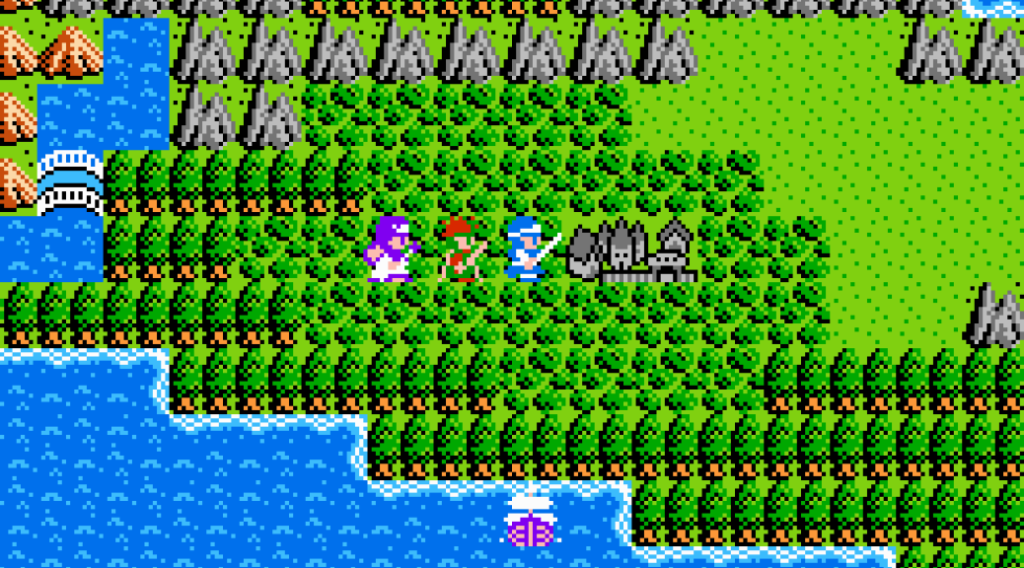
A huge part of mastering Dragon Warrior 2 is understanding what each character is actually for. Your team isn’t three copies of the same hero—each fills a specific role, and when you lean into those roles, the game becomes far more manageable.
The Prince of Midenhall (Your Frontline Leader)
This is your main hero and most reliable physical fighter.
- Strengths: high HP, strong attack, durable armor options
- Weaknesses: limited spellcasting (depending on version/translation, he has little to no magic utility compared to the others)
How to play him: Put your best sword and armor here first. He’s the anchor who keeps random battles safe and bosses stable. In tough areas, he’s the one you expect to still be standing if things go wrong.
The Prince of Cannock (The Hybrid Support)
Cannock is the flexible middle of the party.
- Strengths: healing magic, decent equipment options, adaptable
- Weaknesses: not as tanky as Midenhall, not as magical as Moonbrooke
How to play him: Think of Cannock as your “glue.” He smooths out mistakes with healing, helps with chip damage, and keeps the party stable. He’s also frequently the difference between finishing a dungeon run and having to retreat.
The Princess of Moonbrooke (The Glass Cannon Mage)
Moonbrooke is your spell-focused powerhouse.
- Strengths: strong offensive magic, key utility spells, can swing tough fights with the right timing
- Weaknesses: low HP, fragile, can be overwhelmed quickly in high-damage zones
How to play her: Protect her. Upgrade her defensive gear when you can, but don’t pretend she’s a tank. Her value is in controlling battles—finishing enemies quickly, weakening groups, and providing critical utility at the right moment.
Progression Roadmap: What To Focus on First (Without Over-Spoiling)
Dragon Warrior 2 tends to flow in phases. If you understand what each phase is asking of you, it becomes much easier to decide what to do next.
Phase 1: Early Kingdoms and Party Assembly
Your first “power spike” isn’t a weapon—it’s getting the second and third party member. Until then, your options are limited and the game can feel harsher than it needs to.
Practical goal: prioritize the steps that lead to recruiting your allies. Once the party is complete, your survivability and damage output jump dramatically.
Phase 2: Keys, Crests, and the “Treasure Hunt” Middle Game
After the party forms, the game shifts into a broader scavenger-hunt structure. You’ll chase down key items that unlock new regions, gates, or story progression.
Practical goal: treat towns like information hubs. Talk to everyone. If an NPC seems oddly specific (“a shrine in the south” or “a treasure beyond the swamp”), write it down mentally. Dragon Warrior 2 rewards attentive players.
Phase 3: Ship Travel and Open-World Risk
Once you can travel more freely, the world becomes both exciting and dangerous. Many players hit a wall here because they assume “I have a ship, so I can go anywhere.” You can—but you shouldn’t.
Practical goal: explore in short loops. Sail out, test enemy strength, retreat if battles feel too costly. Your goal is controlled expansion, not blind wandering.
Phase 4: Endgame Dungeons and Attrition Management
Late-game Dragon Warrior 2 is about endurance. Dungeons get longer, enemies hit harder, and resource management matters again.
Practical goal: plan dungeon runs like expeditions. Bring enough healing, use MP wisely, and don’t be ashamed to retreat and retry. The game is built for that.
Combat Strategy: How to Win Consistently (Not Just Eventually)
Turn-based combat in Dragon Warrior 2 isn’t complicated mechanically, but decision quality matters more than people expect.
Prioritize Threats, Not HP Totals
A common mistake is to attack whatever has the lowest HP. Instead, target enemies that:
- cast dangerous spells
- hit multiple party members
- can put you to sleep or disrupt your turn economy
- have high critical potential or sudden burst damage
Even if that monster has more HP, removing it first often reduces incoming damage dramatically.
Use “Tempo” Thinking: Stabilize, Then Win
When you enter a tough battle, ask: “Are we safe?” If not, spend a turn stabilizing.
- Heal before someone drops into “one-hit range”
- Use defensive or control magic when it prevents more damage than a heal would restore
- Remove the enemy that’s about to cause chaos
Once you’re stable, then shift to damage.
Make Your Turns Do Double Duty
Efficient turns matter in long dungeons.
- If Moonbrooke can finish a group with magic, you save HP across the party
- If Cannock heals at the right time, you prevent a death spiral and preserve items
- If Midenhall reliably deletes one enemy per turn, you control the fight size
The goal isn’t flashy plays. It’s consistent reduction of risk.
Practical Insights: Leveling Efficiently Without Mindless Grinding
Yes, Dragon Warrior 2 has grinding. But “grinding” doesn’t have to mean wandering aimlessly for hours. Efficient leveling is about choosing the right region for your current strength and running short, repeatable loops.
The Best Grinding Spots Are Close to Safety
If you’re leveling, you want:
- enemies that give solid experience
- manageable damage output
- quick access to an inn or healing
That last point matters more than people think. If you can heal quickly, you can fight more battles per minute, which is what actually drives leveling speed.
Stop Grinding When Battles Feel Comfortable
A simple benchmark that works well:
- If normal battles require frequent emergency healing, you’re underleveled.
- If normal battles are safe and you’re only spending light resources, you’re in the sweet spot.
- If enemies barely scratch you and experience feels slow, move on.
This mindset prevents over-grinding and keeps the adventure moving.
Example: The “Two Battle Test”
When you reach a new area, fight two random battles. If after two battles you’ve burned too much MP or had a near-death moment, step back and level or upgrade gear. It’s fast feedback and saves frustration.
Equipment Strategy: What to Buy First and Why
Gold is limited early, and the game happily tempts you with upgrades that look good but don’t actually solve your biggest problem.
Early Priorities: Survivability Beats Damage
Especially once the full party is assembled, your biggest risk is losing Moonbrooke or Cannock to sudden damage spikes. A small defensive upgrade on a fragile character can prevent wipes.
Buying rule that works well:
- Keep Moonbrooke alive
- Keep Cannock functional
- Let Midenhall carry the offense
Midenhall is naturally sturdy; Moonbrooke often isn’t.
Don’t Ignore “Small” Gear Upgrades
A +2 defense upgrade can feel boring, but in a game where you fight hundreds (or thousands) of battles, those small reductions add up to massive saved resources over time.
Example Gear Decision
If you can either:
- increase Midenhall’s attack slightly, or
- increase Moonbrooke’s defense so she survives an extra hit,
the second choice often leads to faster progress. When Moonbrooke survives longer, you spend fewer turns and resources reviving/recovering and more time actually clearing content.
Exploration: How to Navigate Without Feeling Lost
Dragon Warrior 2 is built around curiosity and clues. If you play it like a checklist, it can feel opaque. If you play it like a travel journal, it clicks.
Talk to Everyone (But Listen for Patterns)
Not every NPC matters, but key NPCs tend to:
- mention a location you haven’t visited
- hint at an item with a unique name
- describe a landmark (tower, shrine, cave, swamp, cape)
- reference “beyond” a geographic boundary
When you hear those details, treat them like breadcrumbs.
Keep Your Own Mental Map
You don’t need to draw maps, but do note:
- which towns connect to which regions
- where you saw locked doors you couldn’t open yet
- where a shrine or cave entrance is located relative to a coast or mountain
Dragon Warrior 2 loves to send you back to earlier places once you gain a key item. Remembering those earlier “blocked” spots saves time.
Dungeon Survival: How to Finish Long Caves Without Running Dry
Late dungeons can feel punishing if you approach them like a straight sprint. Instead, think like a careful explorer.
Resource Management Basics
- Use healing spells for medium recovery and items for emergencies (or vice versa depending on your gold and MP situation)
- Avoid “overhealing” when it wastes MP needed later
- If a character is low on MP, switch them to physical attacks in easy fights
Know When to Retreat
Retreating isn’t failure in Dragon Warrior 2. It’s often the correct tactical move. If you’re deep in a dungeon and your healing capacity is gone, pushing forward usually costs more time than retreating and returning prepared.
Example: The “Half Supplies” Rule
If you’re halfway through a dungeon (based on your own sense of distance) and you’ve used more than half your MP and healing items, turn back. It’s a simple rule that prevents catastrophic wipes.
Expert Tips That Make Dragon Warrior 2 Feel Easier (Without Cheating)
These are the kinds of habits experienced players develop—small choices that quietly improve your success rate.
1) Treat Sleep and Disruption as Emergencies
If your party gets disrupted (sleep, multi-target pressure, or heavy spell damage), prioritize restoring control over dealing damage. A single lost turn can snowball into a wipe.
2) Rotate Healing Responsibility
Don’t let one character burn all their MP early unless you must. Spread the healing load when possible so you have options in boss fights and deep dungeon floors.
3) Upgrade Before You “Need” It
If you wait until an area is already hurting you badly, you’ll spend more time recovering and possibly lose money to deaths. Buying the right gear one town earlier often makes the next segment smoother and faster.
4) Use Safer Routes for Return Trips
After claiming an important item, it’s tempting to take the shortest path back. Sometimes the safest route is longer but avoids high-risk encounters. Getting knocked out on the way home is one of the most frustrating ways to lose momentum.
Common Mistakes (And How to Avoid Them)
Dragon Warrior 2 has a few classic player traps. Avoid these, and the game feels far more fair.
Mistake 1: Sailing Into High-Level Zones Too Early
The ship (or expanded travel) creates a false sense of readiness. If enemies start hitting for alarming damage or you’re forced to heal every fight, back off and explore a different coastline.
Fix: explore in small loops and retreat often until you find the “correct” difficulty band.
Mistake 2: Over-Focusing on the Main Hero’s Gear
It’s natural to treat Midenhall like the whole team, but the party is only as strong as its weakest link—often Moonbrooke’s survivability.
Fix: keep everyone’s defensive gear competitive, especially your fragile caster.
Mistake 3: Burning MP on Easy Battles
Spending MP to win faster feels good… until you’re deep in a dungeon and realize you’ve been paying “interest” all along.
Fix: use physical attacks in low-risk fights and save spells for spikes, groups, or emergencies.
Mistake 4: Ignoring NPC Hints
Dragon Warrior 2 isn’t trying to be cryptic for no reason; it expects you to gather information the way a traveler would.
Fix: when a clue sounds location-specific or item-specific, take it seriously.
Mistake 5: Pushing Through a Dungeon After Losing Momentum
If you limp forward after multiple close calls, you’ll usually lose time overall.
Fix: retreat when resources are low and re-enter strong. You’ll clear faster on the second attempt.
Practical Examples: Decision-Making in Real Situations
Example 1: You Enter a New Region and Fights Feel Brutal
What many players do: grind right there, taking heavy damage, spending lots of MP, and barely surviving.
What works better: step back one region, gain 1–2 levels safely, upgrade gear in the nearest town, then re-test the new region. Often the difficulty flips from “unfair” to “manageable” with small improvements.
Example 2: A Dungeon Has Strong Random Encounters
What many players do: spam magic every battle to survive, then run out of MP at the end.
What works better: fight “normally” when the enemy group is favorable (use attacks), and only spend spells when the enemy formation is dangerous. This selective casting keeps your reserves intact for the final stretch.
Example 3: Boss Attempts Keep Failing
What many players do: assume they need more levels and grind blindly.
What works better: check your fight plan first. Are you healing too late? Are you focusing the wrong target? Is Moonbrooke getting knocked out early because her gear lags behind? Often one gear upgrade or smarter healing timing does more than five extra levels.
FAQs About Dragon Warrior 2
Is Dragon Warrior 2 beginner-friendly?
Yes, but it’s less forgiving than the first game. The early hours are approachable, but mid-to-late game exploration can spike in difficulty if you wander into the wrong areas. If you play patiently—talk to NPCs, upgrade gear regularly, and retreat from dungeons when needed—it becomes very manageable.
Why do people say Dragon Warrior 2 is hard?
Because it mixes open exploration with regions that vary widely in enemy strength. It’s easy to sail somewhere “too advanced,” get overwhelmed, and feel like the game expects excessive grinding. In reality, smart routing and good resource management solve much of that perceived difficulty.
What’s the best party strategy overall?
A stable, reliable approach is:
- Midenhall focuses on physical damage and durability
- Cannock keeps healing and contributes damage when safe
- Moonbrooke uses magic to control tough battles and remove dangerous enemy groups quickly
The key is keeping Moonbrooke alive long enough for her spells to swing fights.
Should I grind levels or push the story?
Do both strategically. If random battles are draining your resources faster than you can replenish them, you need either levels, gear, or a safer route. If battles feel comfortable, pushing the story is usually the better choice than over-grinding.
How do I know I’m ready for a new dungeon or region?
Use the “two battle test.” If two random battles in the area cost you a big chunk of HP/MP or nearly kill a party member, you’re not ready yet. If the fights are stable and recoverable, you’re in the right range.
What’s the biggest tip for finishing the endgame?
Treat endgame content like an expedition: enter with a plan, conserve MP in easier fights, and don’t hesitate to retreat if your resources are collapsing. The endgame is designed to reward persistence and preparation, not reckless pushing.
Conclusion
Dragon Warrior 2 is a classic for a reason: it captures the feeling of a real journey—gathering allies, chasing clues across a broad world, and growing from fragile travelers into a confident, capable party. The challenge isn’t just raw difficulty; it’s learning how to travel smart, fight efficiently, and manage your team like a strategist rather than a button-masher.
If you take anything from this guide, let it be this: Dragon Warrior 2 becomes dramatically more enjoyable when you respect its rhythm. Talk to people, upgrade steadily, explore in controlled loops, and treat long dungeons with patience. Do that, and you won’t just “beat” Dragon Warrior 2—you’ll understand it, and it’ll feel like the adventure it was always meant to be.