

Digimon World Dawn is one of those RPGs that looks simple at first—build a team, win battles, digivolve, repeat—but quietly rewards players who understand its deeper systems. If you’ve ever wondered why your Digimon feel underpowered, why you keep “locking” yourself out of evolutions, or how other players build teams that steamroll bosses, the answer usually isn’t grinding harder. It’s planning smarter.
In this guide, you’ll learn how Digimon World Dawn actually works under the hood: how digivolution requirements shape your long-term roster, how to use degeneration without wasting time, how DNA Digivolution can fast-track powerful forms, and how to build balanced teams that handle story bosses and late-game content. I’ll also walk you through practical setups, real examples, expert tips, and the mistakes that trap a lot of first-time players.
What Is Digimon World Dawn?
Digimon World Dawn is a turn-based monster-raising RPG for Nintendo DS where you recruit, raise, and evolve Digimon across a huge roster. You explore zones, complete quests, battle wild Digimon and tamers, and gradually unlock stronger areas and evolutions.
The big hook is progression: your Digimon aren’t meant to evolve once and stay there forever. The game expects you to digivolve and degenerate multiple times to raise stats, meet requirements, and open new branches of the evolution tree. Once that clicks, the game becomes far more strategic—and a lot more fun.
Core Gameplay Loop (And Why It Matters)
At a high level, Digimon World Dawn revolves around five connected loops:
1) Fight to Gain EXP and Stats
Battles grant EXP and improve your Digimon over time. However, raw levels aren’t the whole story. Stat growth and digivolution planning often matter more than simply pushing levels higher.
2) Digivolve to Access Better Forms
Digivolution changes your Digimon’s form, moves, resistances, and growth tendencies. Each digivolution has requirements—usually involving level, stats, and sometimes specific conditions.
3) Degenerate to Grow Stronger Long-Term
Degenerating may feel like “going backward,” but it’s one of the most important power tools in the game. It allows you to keep progress in a way that helps you exceed thresholds that would otherwise be hard to reach.
4) DNA Digivolve for Shortcuts and Unique Results
DNA Digivolution combines two Digimon to create a new one. It’s not just a gimmick—used properly, it can skip awkward requirements and produce high-value Digimon earlier than expected.
5) Quest, Explore, and Unlock New Zones
Progression is gated through story beats and quests. Many players stall because they don’t engage with side quests that unlock facilities, access to new areas, or key recruits.
If you keep these loops working together, your team stays on pace and the difficulty curve feels fair. If you ignore one, the game can feel grindy or punishing.
Understanding Attributes, Types, and Battle Roles
Even if you’re not min-maxing, understanding roles makes your team stronger immediately.
Attributes and Matchups
Digimon have attribute alignments (commonly Vaccine, Data, Virus) and these matchups affect damage outcomes. If a boss is consistently deleting your lead, there’s a good chance you’re taking unfavorable attribute hits and don’t have a swap-ready counter.
Practical approach: carry at least one strong Digimon of each major attribute in your active lineup or in reserve so you can rotate when needed.
Stats That Actually Decide Fights
Different Digimon lean toward different stat profiles, but the stats you should care about most are:
- HP: survivability, especially in boss fights with burst damage
- Attack / Spirit: physical vs. special damage output
- Defense / Wisdom: damage reduction, very noticeable in long fights
- Speed: turn order can swing battles, especially when stacking buffs/debuffs
A fast support Digimon that heals or debuffs before the enemy acts can be more valuable than a slow “strong” attacker.
The Importance of Move Coverage
A common midgame wall is running a team where everyone shares the same damage type or element. You want a spread: single-target nukes, multi-target moves for random encounters, and at least one reliable heal or defensive buff.
Digivolution and Degeneration: The System Most Players Misread

Digimon World Dawn is built around the idea that evolution is a route, not a destination.
Digivolution Requirements Are a Roadmap
When you check digivolution options, you’ll see requirements like level and stat thresholds. Those aren’t just hurdles—they’re telling you what kind of training path the game expects.
If a Digimon requires high Speed and Wisdom, it’s nudging you toward forms and training cycles that build those stats. Trying to brute-force those requirements with a form that naturally grows slow and tanky often creates unnecessary grind.
Why Degenerating Makes You Stronger
Degeneration is the “reset with benefits” mechanic. In many monster RPGs, resetting feels like losing progress. Here, it’s part of the growth curve. Degenerating can:
- Help you meet stat requirements by letting you re-grow with better baselines
- Unlock alternate digivolution branches you couldn’t reach before
- Improve long-term stat potential through repeated growth cycles
Practical insight: if you’re stuck one requirement short (say, Speed), degenerating to a stage with better Speed growth and leveling back up can be faster than trying to force that stat on your current form.
A Simple, Effective Evolution Rhythm
For most of the story, a reliable rhythm looks like:
- Push a Digimon to a comfortable level
- Digivolve when you unlock a meaningful upgrade (moves or stat profile)
- If you hit a wall in requirements, degenerate one step and re-route
- Repeat until you reach a stable endgame form you like
You don’t need to obsess over perfect cycles early, but being willing to degenerate is the difference between a smooth run and a frustrating one.
Practical Team Building: A Framework That Works
You can win with favorites, but a little structure makes favorites shine.
Build Around Three Core Roles
A dependable party usually includes:
- A primary damage dealer (single-target focused)
- An AoE clearer (handles random encounters quickly)
- A support (heals, buffs, debuffs, or status control)
If you only run damage dealers, you’ll waste items and lose to sustained boss pressure. If you only run tanks and supports, fights drag and mistakes pile up.
Keep a Bench That Solves Problems
Digimon World Dawn rewards having options. Keep reserve Digimon that specifically counter common issues:
- A high-Speed disruptor for bosses that buff or heal
- A bulky wall for fights with heavy AoE
- A status-focused Digimon if you’re using poison/sleep/paralysis strategies
When you hit a tough fight, swapping one Digimon can be more impactful than grinding five levels.
Example: A Story-Friendly Balanced Setup
Here’s a practical “it just works” concept you can adapt:
- Slot 1 (Boss Killer): strong single-target attacker with reliable accuracy
- Slot 2 (Wave Clear): AoE move user with enough Speed to act early
- Slot 3 (Support): healer with at least one defensive buff or enemy debuff
Then on the bench:
- Attribute counter (Vaccine/Data/Virus) depending on your main lineup’s weakness
- Utility specialist (status, dispel-like effects, or extra healing)
This structure stays effective from early zones into late-game, even as specific Digimon change.
DNA Digivolution: How to Use It Without Regret
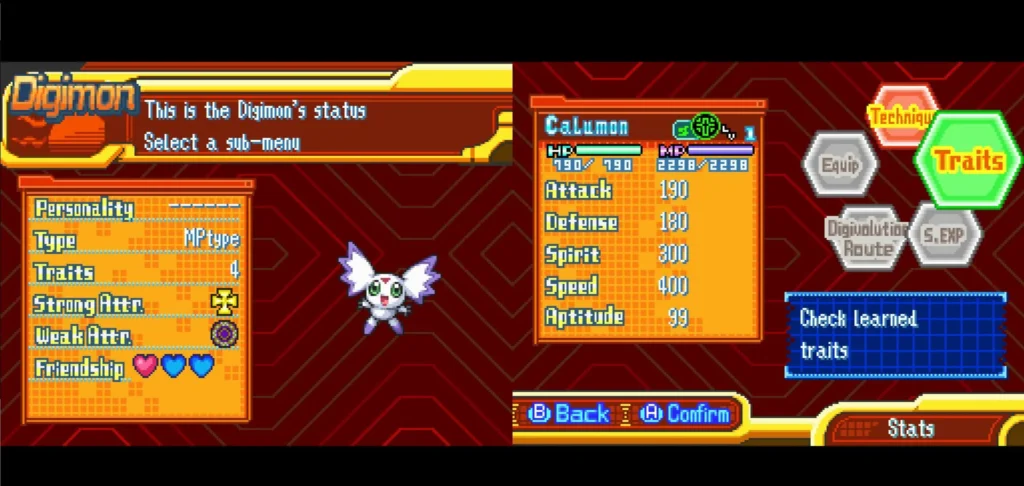
DNA Digivolution can be amazing, but it’s also where players accidentally waste time.
What DNA Digivolve Is Best For
- Reaching certain lines earlier than normal evolution allows
- Creating powerful Digimon with better overall toolkits
- Bypassing awkward requirements when your current stat profile is off
When DNA Digivolution Is a Bad Idea
- When it consumes a Digimon you still need for a quest, zone requirement, or planned branch
- When you haven’t checked whether the result fits your team roles
- When the two Digimon aren’t trained enough to make the result worthwhile
Practical rule: treat DNA Digivolution as a “planned craft,” not an experiment. Decide what you want to end up with first, then work backward to what you need.
A Practical DNA Planning Example (How to Think)
Let’s say your team is missing a fast support, but your current roster is full of slow bruisers. Instead of trying to force Speed growth on a tanky line, you can:
- Raise one Digimon with naturally high Speed growth
- Raise another that contributes healing/support move inheritance
- DNA Digivolve into a form that fits the support role cleanly
The exact combinations vary by your roster, but the thinking pattern stays the same: target role → target result → choose parents that naturally grow the needed stats and moves.
Efficient Leveling and Farming Without Burning Out
Grinding is part of Digimon World Dawn, but “smart grinding” feels more like progress than repetition.
Prioritize Areas Where You Win Fast
If battles take too long, your EXP per minute drops. The best leveling spot is often not the highest-level zone you can survive—it’s the zone you can clear quickly with minimal healing.
Rotate Digimon to Avoid Dead Weight
A common trap is leveling only the active trio and letting the rest of your roster fall behind. Then a boss demands a counter and you have nothing ready.
Practical approach:
- Keep a rotating fourth and fifth Digimon catching up
- When one hits a new digivolution threshold, bring it forward
- Don’t wait until the game forces you to diversify
Train for Requirements, Not Just Levels
If your next evolution requires a specific stat threshold, spend your time improving the bottleneck stat instead of mindlessly leveling. This is where degeneration planning saves hours.
Use Move Sets to Speed Up Encounters
If random battles slow you down, it’s usually because:
- You lack a consistent AoE option
- Your Speed is low so enemies act first
- Your damage types don’t match enemy resistances
Fixing move coverage can make “grinding” feel like half the work.
Advanced Progression: How to Think Like a Builder, Not a Collector
Once you’re past the early story, the game shifts from “get stronger” to “get deliberate.”
Build Lines That Complement Each Other
Instead of raising six attackers, raise:
- One physical attacker
- One special attacker
- One support/healer
- One utility/status controller
- One tank/wall
- One flexible slot for attribute coverage
You’ll notice bosses stop feeling random and start feeling solvable.
Inheritance Mindset: Don’t Leave Great Moves Behind
One of the biggest power spikes comes from carrying the right moves forward. If you find a line that learns an excellent buff, heal, or high-efficiency attack, consider keeping that Digimon in your broader plan even if you don’t love the mid-stage forms.
The point isn’t to hoard every move—it’s to preserve the ones that define a role:
- Reliable heals
- Party-wide buffs
- Strong single-target finishers
- Efficient AoE clears
Speed Control Wins Late-Game Fights
Late-game enemies can hit hard, heal, and punish slow teams. If you’re struggling despite good levels, check Speed. Having at least one Digimon that consistently acts early to heal, debuff, or set up a buff often flips losses into clean wins.
Expert Tips That Make Digimon World Dawn Feel Easier
Tip 1: Decide Your “Core Three,” Then Build Branches Around Them
Pick three Digimon you genuinely like using. Commit to making them functional as a unit (damage, coverage, support), then use the rest of the roster to open evolution branches and fill counters.
This avoids the “I have 20 Digimon and none of them are ready” problem.
Tip 2: Treat Degeneration as Optimization, Not Failure
If you feel bad degenerating, you’ll resist the mechanic and end up grinding more. If you embrace it, you’ll reach digivolutions earlier and with cleaner stat spreads.
Tip 3: Don’t Overinvest in One Damage Type
If all your best moves are physical, you’ll hit enemies that shrug it off. Keep at least one strong special attacker or a Digimon with flexible move options.
Tip 4: Keep One “Utility Slot” in the Party
This is the Digimon you swap frequently: sometimes it’s a status spreader, sometimes a tank, sometimes an attribute counter. That one slot is your answer to the game’s variety.
Tip 5: Save Your Time by Avoiding Slow Wins
If a battle strategy “works” but takes forever, it’s a bad farming strategy. Optimize for speed during routine play and save your defensive, methodical tactics for bosses.
Common Mistakes (And How to Fix Them)
Mistake 1: Staying in One Form Too Long
Some players find a cool Digimon and refuse to change it. The downside is you miss out on better growth curves and route options. Fix: digivolve when it meaningfully improves your toolkit, and degenerate when you need a different stat profile.
Mistake 2: Ignoring Speed Until It’s Too Late
If enemies always act first, you’ll spend turns recovering instead of progressing. Fix: aim for at least one fast Digimon in the active team, and prioritize Speed growth when you notice turn-order problems.
Mistake 3: Building Three Attackers and Calling It a “Team”
That works early, then collapses on bosses with AoE and sustain. Fix: dedicate one slot to support (heals/buffs/debuffs). You’ll save more resources than you spend.
Mistake 4: DNA Digivolving Without a Target
Random DNA choices often produce a Digimon that doesn’t fit your party and costs you two useful parents. Fix: choose the result first, then prepare parents intentionally.
Mistake 5: Grinding Levels Instead of Meeting Requirements
You can be overleveled and still unable to digivolve if you neglected key stats. Fix: look at your next evolution requirement and plan the fastest route to those stats (often via degeneration).
Practical Examples You Can Apply Immediately
Example 1: You’re Stuck Just Short of an Evolution Requirement
Problem: You’re level-ready but missing a stat threshold (like Speed or Wisdom).
Solution:
- Check whether your current form has poor growth in that stat.
- Degenerate one stage to a form with better growth.
- Level back up while focusing on the needed stat.
- Digivolve into the desired branch.
This usually beats grinding 10+ extra levels in a slow-growth form.
Example 2: Random Encounters Are Dragging
Problem: Every fight takes too many turns.
Solution checklist:
- Add or upgrade one AoE move user
- Increase Speed on at least one Digimon to act first
- Replace inefficient moves with ones that hit harder per turn
- Consider swapping in a different attribute if enemies resist your current damage
Your goal is to end normal encounters quickly so your real time goes into meaningful fights.
Example 3: A Boss Keeps Outlasting You
Problem: Boss damage is manageable, but you run out of healing/items.
Solution:
- Add one dedicated support Digimon with reliable heals
- Use debuffs to reduce incoming damage rather than only healing it afterward
- Bring an attribute counter from your bench to cut the boss’s damage output and increase yours
Boss fights in Digimon World Dawn often reward “less damage taken per turn” more than “more damage dealt per turn.”
FAQs About Digimon World Dawn
Is Digimon World Dawn beginner-friendly?
Yes, but it’s easy to misunderstand the evolution system at first. Once you get comfortable with digivolution and degeneration, the game becomes much smoother and less grind-heavy.
Should I degenerate often?
Often enough that it feels like a tool, not a punishment. If you’re stuck on a requirement, want to reroute into a different branch, or need better stat growth, degeneration is usually the smartest move.
What’s the best way to build a strong team quickly?
Use a balanced structure: one single-target attacker, one AoE clearer, and one healer/support. Then keep at least one bench Digimon as an attribute counter for tough fights.
Do I need to use DNA Digivolution to beat the game?
No, but it can make progression faster and open powerful options earlier. The key is using it intentionally—plan the result and make sure it fits your party.
Why do my Digimon feel weaker after digivolving?
Sometimes a new form shifts stat distribution or loses the comfort of your previous move set. That doesn’t mean it’s worse long-term. Give it a few levels, rebuild move coverage, and evaluate whether it fits your intended role.
How do I avoid wasting time grinding?
Optimize for fast wins in routine battles, keep move coverage broad, and train for evolution requirements instead of raw levels. When in doubt, adjust your team roles before you add more hours of grinding.
Conclusion
Digimon World Dawn rewards players who treat raising Digimon like building a roster, not just collecting cool forms. When you understand the purpose of degeneration, plan digivolution paths around stat growth, and keep a team that covers damage, speed control, and support, the game stops feeling like a grind and starts feeling like a strategy RPG with real depth.
If you take only one mindset forward, make it this: every time you hit a wall, don’t just level up—ask what the game is trying to teach you about your team. Fix the role gap, reroute your evolution path, and use the systems the way they were designed. That’s when Digimon World Dawn becomes genuinely addictive, and your roster starts evolving with purpose.