
Introduction
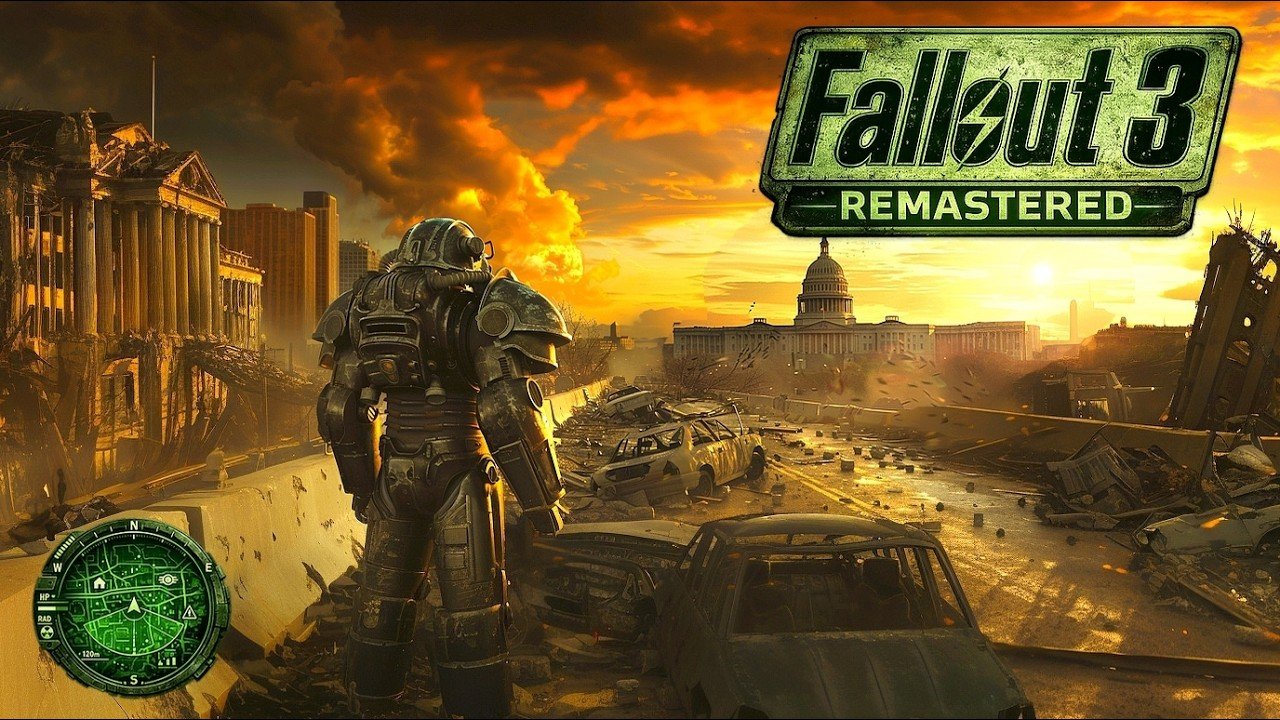
Few games have the kind of legacy Fallout 3 Remaster does. It’s the moment the series stepped fully into 3D and still delivered that unmistakable Fallout mix: haunting ruins, dark humor, moral choices that actually sting, and a wasteland that feels both empty and dangerously alive. But let’s be honest—playing it today can be a rough ride. The atmosphere is still there, the quests still hit, and the exploration still works like a charm, yet the tech has aged in ways you can’t unsee: stability quirks, dated lighting, stiff gunplay, clunky UI, and performance limitations that don’t match modern expectations.
That’s why the idea of a Fallout 3 remaster keeps grabbing attention. Whether you’re a longtime fan hoping for a cleaner, smoother replay or a newcomer who wants to experience the Capital Wasteland without wrestling old-game friction, a remaster could be the perfect middle ground: the original game you love, but updated enough to feel at home on modern hardware.
In this guide, you’ll learn what a Fallout 3 remaster realistically means, what features matter most, what “upgrades” are likely versus wishful thinking, how a remaster could affect mods and DLC, and how to decide whether to wait or jump in now. I’ll also cover practical preparation tips, examples of what improvements would change moment-to-moment gameplay, common mistakes to avoid, and FAQs people ask every time “Fallout 3 remastered” starts trending.
What a Fallout 3 Remaster Actually Means (Remaster vs. Remake)
Before getting swept up in hype, it helps to separate two terms people often mix up.
Remaster: Same Game, Modernized Presentation and Performance
A remaster typically keeps the original game’s structure intact—quests, voice lines, map layout, core mechanics—while improving the technical layer:
Improved textures and materials, better lighting and shadows, higher resolution support, higher frame rates, cleaner UI scaling, better controller support, stability fixes, and quality-of-life improvements that don’t fundamentally change the design.
A Fallout 3 remaster should feel like Fallout 3, just sharper, smoother, and less fragile on modern systems.
Remake: Rebuilt Systems and Often a New Engine
A remake is closer to rebuilding the game: new animation systems, redesigned combat, redesigned UI, and sometimes changed quest flow. A Fallout 3 remake would invite expectations like Fallout 4-style gunplay, new NPC behaviors, revamped leveling, redesigned interiors, and major systemic changes.
If you’re hoping for “Fallout 3, but plays like Fallout 4,” that’s remake territory. Most realistic “remaster” expectations should stay focused on presentation, performance, stability, accessibility, and sensible quality-of-life improvements.
Why Fallout 3 Still Deserves a Remaster
Fallout 3 remains special for reasons that aren’t easily replaced by newer entries.
The Capital Wasteland Has a Distinct Identity
The tone is bleaker than many open-world RPGs. The metros feel claustrophobic and genuinely threatening. The ruined landmarks create a constant sense of “this used to be real.” A remaster that enhances fog, lighting, and environmental detail could make that identity even stronger without changing the underlying game.
It’s a Quest-Driven RPG with Memorable Choices
Fallout 3’s best moments aren’t just fights—they’re decisions. Many players still remember their first big moral fork because the consequences felt personal. A remaster doesn’t need to “add content” to matter; it just needs to remove friction so more players can enjoy what’s already excellent.
The Biggest Barrier Today Is Technical, Not Design
If you’ve tried to replay Fallout 3 recently, you probably ran into at least one of these:
Unfriendly default settings on modern displays, inconsistent performance, UI that doesn’t scale well, audio balancing issues, or general jank that was tolerated in 2008 but feels avoidable now. A remaster’s biggest win is making the game reliable and comfortable.
What We Know vs. What to Expect (Managing Fallout 3 Remaster Hype)
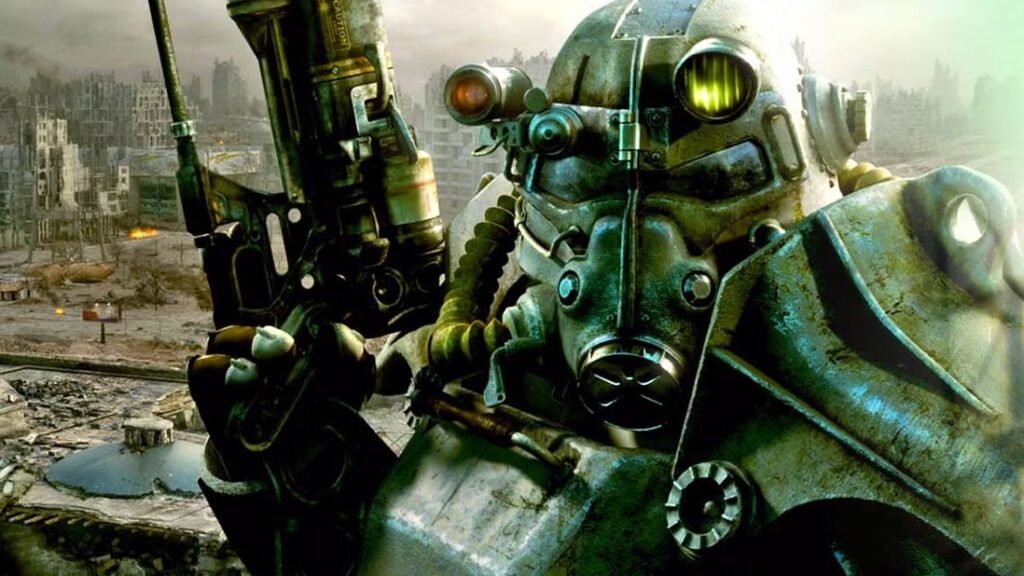
As of now, discussions around a Fallout 3 remaster tend to swing between “it’s definitely coming” and “it’ll never happen.” The truth is usually more boring: companies revisit proven classics when timing, staffing, and platform strategy make sense.
Here’s the healthiest way to approach it:
Focus on what a remaster would logically prioritize—visual uplift, modern platform support, stability, performance—rather than expecting a full mechanical overhaul. When you keep expectations grounded, you’ll enjoy the final product more if it arrives, and you won’t feel burned if it’s modest.
Detailed Main Sections: What a Fallout 3 Remaster Should Improve
If a Fallout 3 remaster is going to earn its place, it should target the upgrades that meaningfully affect moment-to-moment play.
Graphics Upgrades That Matter (Not Just “Higher Resolution”)
A good remaster isn’t simply “same visuals, but 4K.” The most important improvements are the ones that enhance readability and mood.
Lighting, Shadows, and Interior Atmosphere
Fallout 3 lives in its interiors: metro tunnels, vaults, office ruins, and dim corridors where your flashlight becomes part of the tension. Modern lighting could improve:
More natural shadow falloff, better contrast without crushing blacks, improved volumetric fog in tunnels, and less flat-looking indoor scenes.
The goal isn’t to make Fallout 3 bright and glossy. It’s to make it atmospheric in a way that matches how you remember it feeling, not how it literally renders today.
Texture and Material Pass
Updated textures alone can look “off” if materials aren’t adjusted. A strong remaster would improve:
Metal surfaces that read as metal, concrete that doesn’t look like blurry wallpaper, rust and wear that holds up close, and better ground detail so wasteland paths feel less smeared.
Improved Draw Distance and Level of Detail
Fallout 3’s skyline moments—cresting a hill and seeing ruined structures in the haze—are iconic. Better LOD and draw distance can make exploration feel more continuous instead of objects popping in.
Performance Targets: 60 FPS, Stable Frame Times, Faster Loading
Performance is where modern players feel the biggest difference.
60 FPS as the Baseline
A Fallout 3 remaster should aim for stable 60 FPS on modern consoles and PC. Not only does it feel better, it makes input more responsive, which matters in gunfights and VATS transitions.
Frame Pacing and Microstutter Fixes
A game can “hit 60” and still feel off if frame pacing is uneven. A quality remaster prioritizes smoothness, not just average FPS.
Faster Loading and Quick Resume-Friendly Behavior
Modern storage should cut down load times dramatically. In a game with frequent interior transitions, that’s not a minor perk—it changes the rhythm of play.
Gameplay and Quality-of-Life Improvements (Without Breaking the Original)
The best remasters respect the source. You can modernize Fallout 3 without turning it into a different game.
Updated UI Scaling for 4K and Ultrawide Displays
One of the most practical upgrades is UI and text scaling. A Fallout 3 remaster should offer:
UI scale sliders, readable fonts on large TVs, adjustable subtitle size, and proper support for ultrawide resolutions on PC.
Controller Support and Input Customization
Modern expectations include:
Reliable controller support, button remapping, separate sensitivity for aiming and looking, deadzone settings, and consistent sprint/interaction behavior.
Accessibility Options
Even classic RPGs benefit from modern accessibility:
Colorblind settings, subtitle background opacity, adjustable HUD elements, hold/toggle options for actions, and difficulty tuning that doesn’t just inflate enemy health.
Bug Fixes and Quest Stability
Fallout 3 has quests and triggers that can misbehave depending on sequence. A remaster should focus on:
Quest flags that properly set and clear, fewer NPC pathing disasters, and fewer situations where a critical character becomes stuck or unresponsive.
Audio Improvements: The Underrated Game-Changer
People often overlook audio in remaster conversations, but Fallout 3’s world lives in its soundscape.
Cleaner Mix and Better Positional Audio
Metro tunnels become tenser when you can place footsteps and distant growls. Improved positional audio and mixing could make stealth and exploration feel more deliberate.
Radio, Ambience, and Dynamic Range Options
A great remaster offers audio presets (headphones, TV speakers, home theater), plus dynamic range settings so dialogue doesn’t get buried under combat or ambience.
DLC and “Complete Edition” Considerations
A Fallout 3 remaster practically needs to bundle the DLC for players to view it as definitive. Not just for value, but for continuity:
Many builds and character arcs feel more complete with the DLC content available, and new players don’t want to navigate multiple versions.
Practical Insights: How to Prepare (Whether You’re Waiting or Replaying Now)
If you’re thinking about a Fallout 3 remaster, you’ve got two smart paths: wait and keep your first experience fresh, or replay now and treat the remaster as your “definitive” second run. Either way, a little planning helps.
For New Players: How to Get the Best First Playthrough
If you want the “Fallout 3 feel” that fans talk about, lean into these habits:
Explore slowly, listen to terminals and holotapes, and don’t rush the main story. Fallout 3 rewards curiosity more than efficiency.
Use VATS as part of the intended combat rhythm, especially early on. It’s not “easy mode”—it’s part of the game’s identity.
Invest in a few utility perks and skills early (like repair or speech) so you can solve problems in multiple ways.
For Returning Players: Make Your Remaster Playthrough Feel Fresh
A remaster (if it lands) is a great excuse to roleplay differently:
Play a character with strict rules (no stealing, no chems, no fast travel).
Try a themed build (energy weapons scientist, stealth scavenger, melee bruiser).
Make at least three major moral choices differently from your original run and live with the consequences.
Examples: What a Remaster Could Change in Real Gameplay Moments
Speculation is easy; practical impact is what matters. Here are a few grounded examples of how remaster upgrades would actually feel.
Example 1: Metro Tunnels Become Playable Instead of Painful
In the original experience, metro sections can feel visually muddy, with harsh contrast and limited clarity. With improved lighting, shadow detail, and stable performance, you’d get:
Better enemy silhouette visibility at mid-range, more reliable aiming and movement, and a stronger horror tone because you can actually read the environment instead of fighting it.
Example 2: Aiming Feels Less Like Wrestling the Controls
Fallout 3’s gunplay has a particular weight, and it’s not always flattering on modern displays. With improved input response, adjustable sensitivities, and steadier frame pacing:
Non-VATS combat becomes more viable, and switching between real-time shots and VATS feels smoother rather than jarring.
Example 3: The Wasteland Looks “Crisp” Without Losing Its Grit
A careful remaster doesn’t turn Fallout 3 into a glossy shooter. Instead:
You see more detail in rust, rubble, and faded signage; the horizon has cleaner LOD; and the overall palette stays bleak and dusty—just less blurred.
Expert Tips: What to Look for in a Quality Fallout 3 Remaster
When evaluating a remaster—especially in previews or patch notes—look past marketing buzzwords and focus on proof of care.
Tip 1: Prioritize Frame Pacing Over Peak FPS
A stable, consistent 60 feels better than a choppy 90–120 on PC if the frame times are uneven. Smoothness is the real “next-gen” upgrade.
Tip 2: Check UI and Subtitle Options First
UI scaling and subtitle customization are quick indicators of whether the developers accounted for modern screens and modern players. If those are thoughtful, the rest is often solid too.
Tip 3: Verify the “Small Stuff” Improvements
The remasters people love are the ones that polish the daily experience:
Fast inventory navigation, responsive menus, improved autosave behavior, fewer crashes in long sessions, and consistent controller support.
Tip 4: Don’t Demand a Mechanical Overhaul Unless It’s Promised
If you expect Fallout 4 gunplay, you’re setting yourself up for disappointment unless the project is clearly positioned as a remake. Let a remaster be what it is: preservation plus polish.
Mods and a Fallout 3 Remaster: What Players Should Expect
Mods are part of Fallout’s DNA, especially on PC. The tricky part is that remasters can help and disrupt modding at the same time.
How a Remaster Might Help Modders
If the remaster is stable and modernized, it can become a better foundation:
Fewer engine quirks, more consistent behavior across systems, better memory handling, and potentially improved tools or packaging.
How a Remaster Might Break Existing Mods
Even small engine updates can affect:
Script behavior, asset formats, load order behavior, and compatibility with older mod frameworks. If you’ve got a “perfect” modded setup today, a remaster could mean rebuilding your mod list from scratch.
Best Practice: Treat the Remaster Like a New Game Install
If you plan to mod a remastered edition:
Start vanilla first to test performance and stability, then add mods gradually. Keep notes on what changes what, and don’t assume old favorites will behave the same way.
Common Mistakes People Make When Waiting for (or Buying) a Fallout 3 Remaster
Hype has patterns. These are the pitfalls that tend to frustrate players most.
Mistake 1: Expecting a Remake When It’s a Remaster
If your expectations include redesigned combat AI, re-recorded lines, rebuilt cities, and brand-new animations, you’re thinking of a different product category. A remaster is about modernization, not reinvention.
Mistake 2: Assuming “Next-Gen” Automatically Means “Bug-Free”
Even polished releases can ship with quirks. The right mindset is: fewer issues, better stability, and faster fixes—not perfection on day one.
Mistake 3: Over-Focusing on Graphics and Ignoring Usability
If the textures are sharper but the UI is still tiny and the controls feel dated, it won’t matter. The best remasters improve how the game feels to play.
Mistake 4: Letting Nostalgia Rewrite the Difficulty Curve
Fallout 3 has a particular early-game vulnerability. If you remember being powerful too quickly, you may be forgetting how tense the first hours are. A remaster that preserves that tension is doing something right.
Mistake 5: Overmodding Immediately (If Mod Support Exists)
It’s tempting to download everything at once. But stability comes from restraint:
Add a few essential improvements, test thoroughly, then expand slowly.
FAQs About the Fallout 3 Remaster
Is the Fallout 3 remaster officially confirmed?
It depends on what you consider “confirmed.” Unless there’s a direct announcement with product details, platforms, and timing, treat it as unconfirmed. It’s fine to be hopeful, but make purchasing decisions based on what’s real today.
What platforms would a Fallout 3 remaster likely release on?
A modern Fallout 3 remaster would logically target current consoles and PC. If it arrives, expect it to be designed around modern controllers, higher resolutions, and improved performance targets.
Will a Fallout 3 remaster include all DLC?
Most players expect a “complete” package. Bundling DLC makes the remaster feel definitive and avoids fragmenting the audience. If it doesn’t include DLC, it will likely be a major point of criticism.
Will it be 4K and 60 FPS?
Those are baseline expectations for modern remasters. The bigger question is whether performance will be consistently smooth in demanding areas and whether settings will be flexible on PC.
Will a remaster support mods?
PC mod support is a major quality-of-life factor for the community. However, the extent of official support can vary widely. Even without integrated mod tools, players may still mod it—but compatibility could take time.
Can I transfer my saves from the original Fallout 3?
Save transfer is never guaranteed. Even small engine or packaging changes can prevent it. If you care about continuing an old character, assume you may need to start fresh unless save migration is explicitly supported.
Will the remaster change gameplay mechanics like iron sights or sprinting?
Those are more “remake-like” changes, but some remasters do add selective quality-of-life features. If these features appear, they’ll likely be optional or carefully implemented to avoid breaking balance.
Will there be new content?
A remaster typically doesn’t add major story content. Minor additions can happen (like extra settings, small bug fixes, or bundled extras), but brand-new quests are not a standard expectation.
Should I wait for the remaster or play Fallout 3 now?
If you’ve never played Fallout 3 and you’re sensitive to older UI and performance quirks, waiting makes sense. If you’re comfortable with classic RPG jank or you’re eager to experience the story and atmosphere immediately, playing now is still worthwhile. The core game design holds up.
Conclusion
A Fallout 3 remaster is compelling for one simple reason: the game’s strengths were never about cutting-edge technology. They were about worldbuilding, atmosphere, discovery, and choices that stick with you. The problem is that the original experience can be harder to access smoothly on modern setups than it should be, and that friction keeps new players out and returning fans from fully enjoying a replay.
If a remaster happens—and if it’s done with care—the ideal outcome isn’t a different Fallout 3. It’s the same Capital Wasteland, preserved with respect, but upgraded where it counts: stable performance, modern resolution and UI support, improved lighting and textures that enhance mood, better input and accessibility, and fewer technical barriers between the player and the story.
Whether you’re waiting for Fallout 3 remastered or booting up the classic today, the best approach is the same: explore slowly, roleplay boldly, and let the wasteland’s quieter moments do their work. Fallout 3 doesn’t need to be reinvented to be worth your time—it just needs to be playable at its best.