
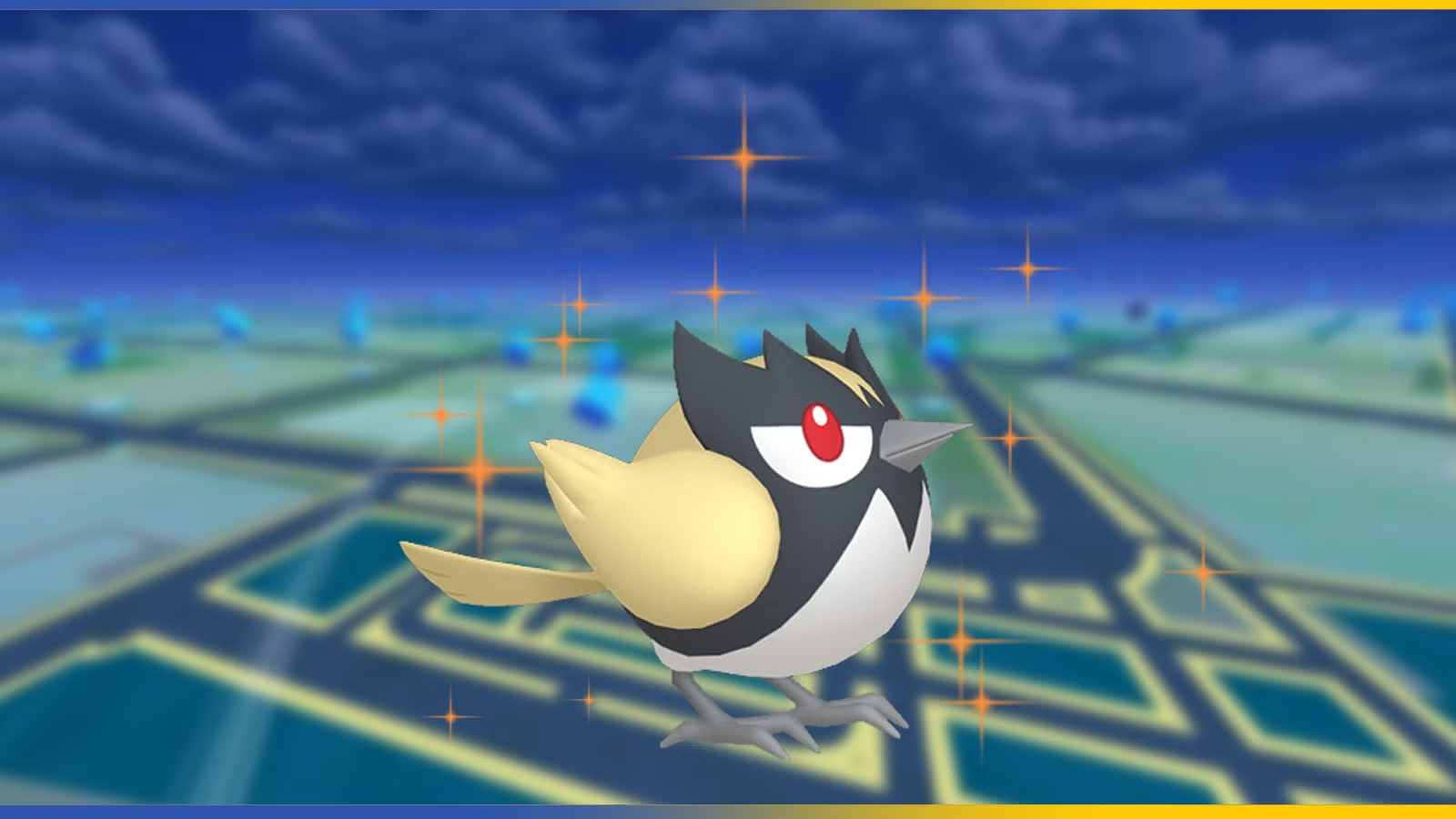
If you’ve ever hunted a Shiny Rookidee that looked amazing in your head… only to realize the shiny version is so subtle you almost walked right past it, you’ll understand the weird little charm of shiny Rookidee. It’s not loud or neon. It’s the kind of shiny that feels like an “I know what I’m looking at” flex—especially once you evolve it into Corviknight and that whole sleek, steel raven vibe really comes together.
But getting a shiny Rookidee isn’t just about luck. The best hunters don’t rely on vibes and hope; they stack odds, choose the right method for their patience level, and plan ahead so the shiny they finally get is one they’ll actually want to use. That means thinking about abilities, natures, moves, and even small details like which ball it’s in. I’m going to walk you through all of it, from “what even is a shiny” to advanced setup that makes your hunt smoother and your final Pokémon better.
What makes shiny Rookidee so popular (even though it’s subtle)
Rookidee is one of those early-route birds that doesn’t feel like an early-route bird. Its final evolution, Corviknight, became an instant fan favorite because it looks like it belongs on a metal album cover and also because it’s genuinely good in battle. That makes shiny Rookidee a fun target: you’re not hunting something you’ll box forever. You’re hunting the beginning of a line that can become a legitimate team member.
Shiny Rookidee itself is understated. The usual bold blues shift into more muted, cooler tones—think “stormy bird” rather than “bright little fledgling.” In some lighting it can be easy to miss, so part of the challenge (and satisfaction) is training your eye to spot it. If your goal is a shiny Corviknight, the payoff gets bigger as it evolves, because the evolved shinies tend to read more clearly in battle and on-screen.
There’s also a collector’s angle here. Because Rookidee is common, some people assume the shiny is “easy,” but that’s not how shiny hunting works in practice. A common spawn just means you can roll the dice faster, not that the dice are kinder. A well-hunted shiny Rookidee—especially one with the right ability, good IVs, an egg move or two, and a ball that fits—still feels premium.
Shiny basics (so you don’t waste your own time)
A shiny Pokémon is simply a rare color variant. The important thing to understand is that “rare” doesn’t mean “guaranteed eventually in a short time.” Even with boosted odds, you can get lucky quickly or you can go dry for days. The goal is to use methods that give you more rolls of the shiny check per hour, while keeping the experience tolerable.
Here are the three levers you can control in most mainline games that include Rookidee:
First, you can increase shiny odds using game mechanics like the Shiny Charm. Second, you can choose a hunting method that produces shinies more efficiently (breeding, outbreaks, encounter methods, etc.). Third, you can reduce “wasted time per attempt” by optimizing your route, your boxes, your hatching loop, your catching setup, and your attention to details that cause accidental fails.
And yes, you can fail a shiny. It’s less common in newer games than it used to be, but it can still happen through misclicks, running out of balls, recoil, weather damage in some titles, or simply not noticing it and despawning it. With subtle shinies like Rookidee, paying attention is part of the job.
Where you can find Rookidee (and why location matters for shiny hunting)
Rookidee appears in multiple modern titles, and the “best” way to hunt it changes based on the game’s mechanics.
Rookidee in Sword and Shield
In Sword and Shield, Rookidee is basically the poster child for “early and everywhere.” You can find it on early routes and in parts of the Wild Area depending on weather. That’s great for hunting because you’re not fighting low spawn rates. You can set up a loop where you’re seeing Rookidee constantly, which is exactly what you want for random encounter methods.

Also, Sword and Shield have a specific system where battling (and defeating/catching) a species enough times increases your odds through extra shiny “rolls.” On top of that, you’ll sometimes see “brilliant” Pokémon with an aura, which can further affect shiny rolls. Those mechanics make Sword and Shield a very legitimate place to hunt shiny Rookidee without breeding, as long as you’re patient and you like the rhythm of encounters.
Rookidee in Scarlet and Violet (if it’s in your available Pokédex)
In Scarlet and Violet, whether you can hunt Rookidee depends on what content you have access to and which Pokédex is active in your save. When it’s available, the hunting style shifts dramatically because Scarlet and Violet favor overworld shiny hunting, outbreaks, and sandwich boosts. You’re no longer stuck in battle animations for every check, which can make hunts feel faster and more “active,” but it also means you need to be sharp-eyed because shinies don’t sparkle in the overworld until you engage them (and some are very easy to miss).
If you’re hunting shiny Rookidee in a game with outbreaks, that becomes one of the best routes because outbreaks are basically the game admitting, “Here, have a concentrated spawn pool and go wild.”
The best ways to get a shiny Rookidee (choose the method that fits you)
Different hunters like different kinds of hunts. Some people love breeding because it’s controlled and you can engineer a competitive Pokémon while you hunt. Other people find breeding mind-numbing and would rather run circles in grass for hours. Both are valid. The good news is that shiny Rookidee is a great target for either style.
Method 1: Masuda breeding (the “I want the perfect shiny” approach)
If you care about nature, ability, IVs, egg moves, and ball aesthetics all at once, breeding is where you get the most control.
The Masuda Method means breeding two Pokémon from different language games (for example, an English Rookidee with a Japanese Ditto). That dramatically increases shiny odds compared to normal breeding. If you add the Shiny Charm on top, you’re stacking your chances even more.
A clean, practical breeding setup looks like this:
You get a foreign Ditto (or a foreign Rookidee line member). You decide what ball you want your shiny Rookidee to be in (this matters more than people think if you’re going to keep it long-term). You give one parent a Destiny Knot to pass down more IVs, and the other parent an Everstone if you want to lock a nature. Then you settle into a tight egg loop where you collect eggs quickly, hatch efficiently, and keep your boxes organized so you’re not constantly stopping to clean up.
If you’ve never done serious breeding before, here’s the biggest quality-of-life tip: set up your party so you always have a Pokémon with an ability that speeds hatching (when available in the game), keep your route short and uninterrupted, and don’t let your boxes become a disaster. The hunt feels twice as long when you’re constantly releasing Pokémon and losing your place.
Breeding also gives you the chance to build in value. A shiny Rookidee with the right nature, strong IVs, and useful egg moves feels “finished” the moment it hatches. That’s a different kind of satisfaction than catching a shiny and then realizing you still have an hour of cleanup to do.
Method 2: Sword and Shield encounter hunting (the “I want it in the wild” approach)
If you’re hunting in Sword and Shield and you want to catch shiny Rookidee in the wild, you’ll be leaning on two things: volume and boosted odds.
Volume is simple: you want a location where Rookidee spawns constantly, with minimal other encounters, and you want a loop that keeps you moving so spawns refresh quickly.
Boosted odds come from two main sources in Sword and Shield: the Shiny Charm and the game’s “number battled” bonuses. The more Rookidee you’ve battled or caught, the more the game may grant extra shiny rolls for that species. People often aim for big milestones (you’ll hear hunters talk about hitting a high battled count) because it makes the grind feel like it’s building toward something.
Here’s what experienced hunters do differently during encounter hunts:
They pick a route that minimizes distractions. They use repels strategically when needed to avoid unwanted encounters (depending on your location and level). They keep their lead Pokémon prepared to catch without accidentally knocking things out. And they watch carefully, because shiny Rookidee can be easy to mistake for normal at a glance.
This method is also great if you like the story of “I found it out there.” There’s something satisfying about the moment you see it sparkle in battle and realize it wasn’t an egg counter—your eyes caught it.
Method 3: Outbreak hunting and overworld boosts (the “fast checks, sharp eyes” approach)
When Rookidee is available in a game with outbreak mechanics, outbreaks can be one of the most efficient ways to hunt because you’re effectively narrowing the game’s attention onto one species.
The smart way to do outbreak hunts is to do a little prep first:
You clear enough of the outbreak to trigger the game’s boosted outbreak odds (exact numbers vary by game, but the concept is always “defeat/catch a bunch, then your odds improve”). You bring a Pokémon that won’t accidentally wipe the target with critical hits or super-effective moves. You position yourself so spawns refresh quickly. Then you start scanning.
With subtle shinies, scanning is an actual skill. Don’t sprint mindlessly. Move in a controlled loop, let spawns appear, and check each one with intention. If you’re the type who gets tired eyes, take breaks. Your brain starts auto-filtering details when you’re fatigued, and that’s when people walk past shinies.
If your game allows shiny-boosting food powers or similar buffs, those can stack nicely with outbreaks. This is the method that can feel almost unfair when everything aligns—until you go dry anyway, because shiny hunting loves humbling everyone equally.
Method 4: Raids and dens (situational, but worth understanding)
Depending on the game, raid-style battles can sometimes be a way to get shiny Pokémon, but they’re typically not the most reliable way to target a specific shiny like Rookidee unless the game is running an event, you’re in a coordinated group, or you’re prepared for a lot of RNG.
Where raids do shine (no pun intended) is when you care about guaranteed high IVs or hidden abilities. If you happen to come across a raid with the Rookidee line and you enjoy that content, it can be a nice side-hunt. I just wouldn’t make it your main plan unless you already know the game’s raid shiny rules and you’re comfortable with the time investment.
Planning your shiny Rookidee so it’s not “just shiny,” but actually good
Getting the shiny is the headline moment, but the part you’ll appreciate later is planning the details so it becomes a Pokémon you actually use. If you’ve ever had a shiny you loved visually but hated using because it had the wrong ability, bad nature, or a miserable move pool, you know what I mean.
Abilities: what you should aim for (and when it matters)
Rookidee’s line has a few ability options, and what you want depends on your end goal.
If you’re building toward Corviknight for competitive or serious battles, Mirror Armor is the big one people chase. It can reflect stat drops, which is useful in a lot of matchups and makes Corviknight harder to bully with certain strategies. It feels impactful in real games, not just on paper.
The non-hidden abilities can still be fine depending on the format and your playstyle, but if you’re investing time into a shiny hunt, it’s worth thinking ahead. If you’re breeding, you can plan for ability inheritance. If you’re catching, you may need to accept what you get or be prepared to hunt longer.
My honest advice: if your dream is a “forever Corviknight,” prioritize the ability early. It’s one of those details that’s annoying to fix later.
Nature and stats: decide what you’re building toward
If you don’t battle competitively, you can ignore this section and just enjoy your shiny. But if you want your shiny Corviknight to pull its weight, natures and IVs matter.
Corviknight often thrives as a bulky, defensive pivot or setup wall. That usually means you’re looking for a nature that doesn’t sabotage its strengths. Many players lean toward natures that support bulk and consistency rather than raw speed.
If you’re breeding, you can lock a nature with an Everstone. If you’re catching, you might use mints later depending on the game, but it’s still nice when the shiny arrives “correct” from the start.
IVs are similar. Breeding gives you control, especially with Destiny Knot setups. Raids can sometimes give you strong IVs automatically. Random encounters are more of a gamble, though you can still polish a Pokémon later if the game provides tools for that.
Egg moves: the little upgrades that make your shiny feel custom-built
Rookidee can access some genuinely useful egg moves depending on the game, including options that support team utility and mobility. Moves like Roost and Tailwind are classic examples of why people breed this line intentionally rather than just catching one and calling it a day.
If you’ve never passed egg moves before, don’t overcomplicate it. The short version is: plan your parent Pokémon so the baby hatches with the move you want, or use the game’s modern egg move transfer mechanics if available. Either way, a shiny that hatches already knowing a key move feels special—like you built it, not like you stumbled into it.
Ball choice: yes, it matters (and no, it’s not shallow)
People love to pretend ball matching is “extra,” but it’s one of the easiest ways to make your shiny feel intentional. Rookidee’s line has a clean, cool aesthetic, so darker balls, sleek balls, or anything that matches the vibe can look fantastic when you send it out.
If you’re breeding, remember that ball inheritance rules can affect your outcome. If you care about the ball, plan the parent that carries it and don’t leave it to chance. If you’re catching, bring the balls you want to use and enough of them that you won’t panic-throw your “wrong” ball because you’re stressed.
Catching shiny Rookidee safely (without turning your dream into a horror story)
Shiny hunting should be fun. The fastest way to ruin it is to finally find the shiny and then fumble the catch.
Here’s a safe, practical catching approach that works in most games:
Save if the game allows you to save before engaging it in a way that preserves the spawn. (This is game-dependent, so know the rules in your title.) Use a Pokémon that can inflict a reliable status condition like sleep or paralysis. Avoid using moves that can accidentally KO through critical hits or double damage. If the game has recoil risks or weather chip damage that could end the battle, factor that in too.
Rookidee itself is not some legendary threat, but that can actually make it more dangerous. People get careless with low-level targets. They toss a strong move “just to weaken it,” it crits, and that’s it. Bring something that can tap it safely—preferably with a move designed for controlled catching.
Also, because shiny Rookidee is subtle, confirm before you do anything dramatic. In most games, shinies will have a sparkle animation in battle and/or a distinct icon in the summary. Don’t rely purely on your eyes in the overworld. The lighting can mess with you.
Turning shiny Rookidee into a Corviknight you’ll actually use
Once you have shiny Rookidee, the next step is deciding what it’s going to be. “A shiny Corviknight” can mean a lot of different builds depending on your goals.
A reliable defensive pivot build
This is the classic Corviknight role: soak hits, switch into threats, and provide steady value. The moves you choose will vary by game and format, but the idea stays the same. You want consistent recovery if available, strong defensive typing value, and at least one move that makes opponents respect you rather than treating you like a free turn.
If you’ve ever played with a good Corviknight, you know how annoying it can be in the best way. It doesn’t need to sweep to dominate a match. It just needs to keep showing up, denying progress, and forcing awkward choices.
A setup tank build (the “I will not die” style)
Corviknight can also be built to set up and win slowly. If you like the feeling of turning a defensive Pokémon into a win condition, this is where you’ll have fun. Depending on the game, you can use defense-boosting moves and convert that bulk into offense with the right attacking option. It’s one of those builds that looks boring until you watch an opponent slowly run out of answers.
If you’re going this route, IVs, nature, and ability start to matter even more. A shiny you invested in—good stats, correct ability, intentional moves—feels incredible here because you’ll actually see it perform.
A utility support build (team-first, but still stylish)
Some players want Corviknight primarily for utility: speed control, hazard control in formats where that exists, or general support while still being bulky and hard to remove. If that’s you, plan your moves around what your team needs, not what looks strongest on a standalone moveset list.
This is also where egg moves can quietly make your shiny stand out. Lots of Corviknight exist. A shiny one that’s clearly bred and built with a purpose feels different.
Common mistakes people make when hunting shiny Rookidee (and how to avoid them)
The biggest mistake is not committing to a method. People switch methods constantly: a few encounters, then a few eggs, then an outbreak, then back again. That’s fine if you’re experimenting, but it’s awful if you’re doing it out of frustration. Choose the method that suits your personality and stick with it long enough to let the odds work.
The second mistake is hunting without a plan for what happens after the shiny appears. If you want Mirror Armor, say so now—before you’ve already caught or hatched something you’re not happy with. If you want it in a specific ball, decide before you start. If you want it to have Roost or Tailwind (or any other valuable move it might not learn easily later), plan it now. It’s way easier to do the thinking up front than to feel disappointed after the shiny moment.
The third mistake is sloppy execution: not paying attention to subtle coloration, rushing through spawns, hatching with messy boxes, or trying to catch with an overpowered attacker. Shiny hunting rewards calm repetition. If you build a smooth routine, you’ll last longer and you’ll enjoy it more.
And finally, don’t underestimate how much tiredness impacts shiny hunts. If you’ve been staring at tiny birds for three hours, your brain starts smoothing over details. Take a break. You’re not “losing progress” by resting—you’re preventing mistakes.
Trading, legitimacy, and why a “good” shiny Rookidee has real value
Even if you never plan to trade your shiny Rookidee, it’s worth understanding why some shinies are valued more than others.
A shiny with a clean origin (clearly obtained through normal gameplay), in a thoughtful ball, with desirable ability/nature/IVs, and maybe even a mark or special flair (depending on the game) is simply more desirable. Not because of some fake economy, but because it represents time, planning, and taste.
If you do trade, be picky. If something seems too perfect, too easy, or too suspicious, trust your instincts. A shiny hunt should feel rewarding, not questionable.
Final thoughts: the best way to get shiny Rookidee is the way you’ll actually finish
Shiny Rookidee is a fantastic target because it sits at the intersection of “cute early Pokémon” and “serious final evolution.” You can hunt it casually and still feel accomplished, or you can go full craft-mode and build a competitive-ready shiny Corviknight that you’ll keep using for years.
If you want maximum control and a shiny you can fine-tune from birth, go Masuda breeding and plan your ball, ability, nature, and egg moves from the start. If you want the thrill of finding it out in the world, set up an efficient encounter loop (or an outbreak when available), sharpen your eye for subtle color differences, and keep your catching tools ready so you don’t fumble the moment.
Either way, the real secret isn’t some magic trick—it’s consistency. Pick a method you don’t hate, optimize it until it feels smooth, and keep going. When shiny Rookidee finally shows up, it won’t just feel like luck. It’ll feel like you earned it.