
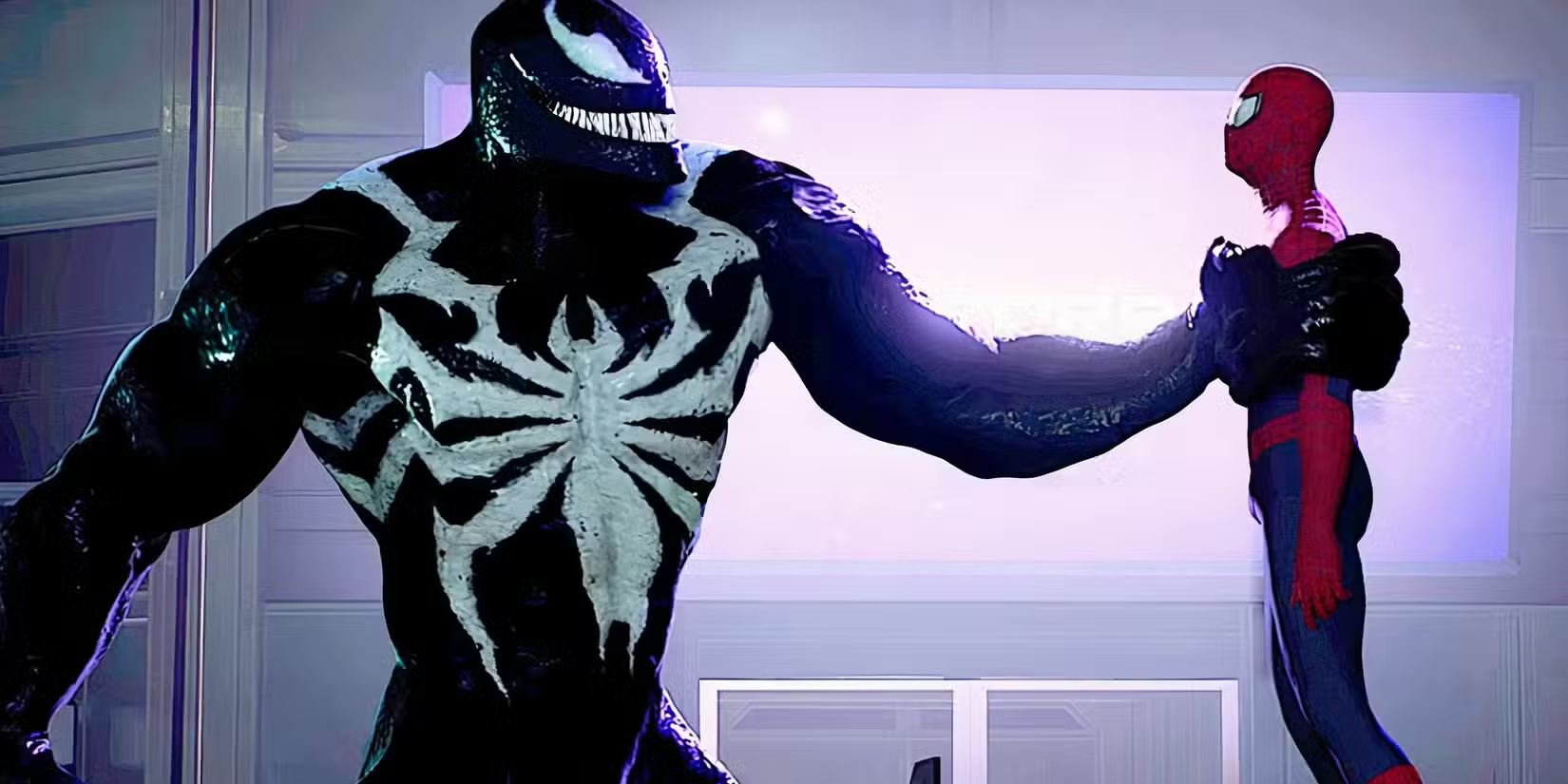
If you’ve ever typed “venom game” into a search bar, chances are you weren’t looking for something subtle. Venom is loud. He’s messy. He’s power fantasy and body horror in the same breath. And he’s one of those characters who instantly makes you imagine what the gameplay would feel like: swinging like Spider-Man but heavier, hitting like a truck, crawling up walls like an animal, and turning into a walking weapon when things get serious.
The funny thing is, Venom has been in a lot of games… but truly great Venom gameplay is rarer than it should be. Sometimes he’s a skin. Sometimes he’s a boss. Sometimes he’s playable for a few glorious missions and then the game moves on. And every time that happens, it leaves people wanting the same thing: a full, proper Venom game that gets the character right.
This article is a deep, no-fluff guide to Venom in games—past, present, and what “good” Venom gameplay actually means. Whether you’re brand new and just want to know what to play, or you’re the kind of person who debates symbiote lore and combat design, you’ll find something here.
What People Usually Mean When They Say “Venom Game”
“Venom game” can mean a few different things depending on who’s asking.
For some players, it means any game where Venom appears at all—boss fights, story missions, cameos, skins, anything. For others, it means games where Venom is fully playable and not just for five minutes. And for the die-hard fans, “venom game” means the dream: a standalone title where Venom is the main character, with mechanics built around the symbiote and the Eddie Brock (or host) relationship.
So as we go through this, I’m going to cover all three angles:
- The best games where Venom is playable
- The best games where Venom is a major presence (even if not playable much)
- What a truly great standalone Venom game would look like—and why it’s so hard to nail
Why Venom Is Tricky to Turn Into Great Gameplay
On paper, Venom sounds like an easy win for game design. Big attacks, cool tendrils, wall-crawling, shape-shifting weapons, regeneration. But the character comes with built-in problems that designers have to solve.
First, Venom is overpowered by default. In many versions of the lore, he’s stronger than Spider-Man, more durable, and equipped with abilities that can trivialize ordinary enemies. If a game lets Venom cut loose with full symbiote power all the time, combat risks becoming repetitive: you mash heavy attacks, everything flies, and challenge disappears.
Second, Venom is not just “a monster.” He’s also a person (or at least shares the body with one). A good Venom story involves conflict: control, hunger, rage, morality, and consequences. Translating that into gameplay means you need systems that represent that tension—without turning the game into a slow morality simulator.
Third, Venom’s movement is different. Spider-Man feels like speed, rhythm, and finesse. Venom should feel like momentum, weight, brutality, and predatory agility. If developers simply reskin Spider-Man movement, players notice instantly, and it doesn’t scratch that itch.
When a venom game really works, it’s because the game embraces those challenges instead of dodging them.
A Quick History of Venom in Video Games (And Why Fans Keep Asking for More)
Venom’s gaming history is basically a long series of “almost.” He shows up in major Spider-Man titles, he’s playable in a few, and he’s often the best part… but usually not the whole meal.
Older games often treated Venom like a special feature: a boss fight with wild animations, or a secret playable character as a reward. That was exciting in the era when simply seeing Venom on-screen felt like a big deal. But modern players want something deeper: progression systems, skill trees, mission variety, narrative choices, and a combat sandbox that lets Venom be Venom.
And that brings us to the games that actually get closest.
The Best Games Where Venom Is Playable
Ultimate Spider-Man (One of the Most “Venom-Centric” Experiences Ever Made)
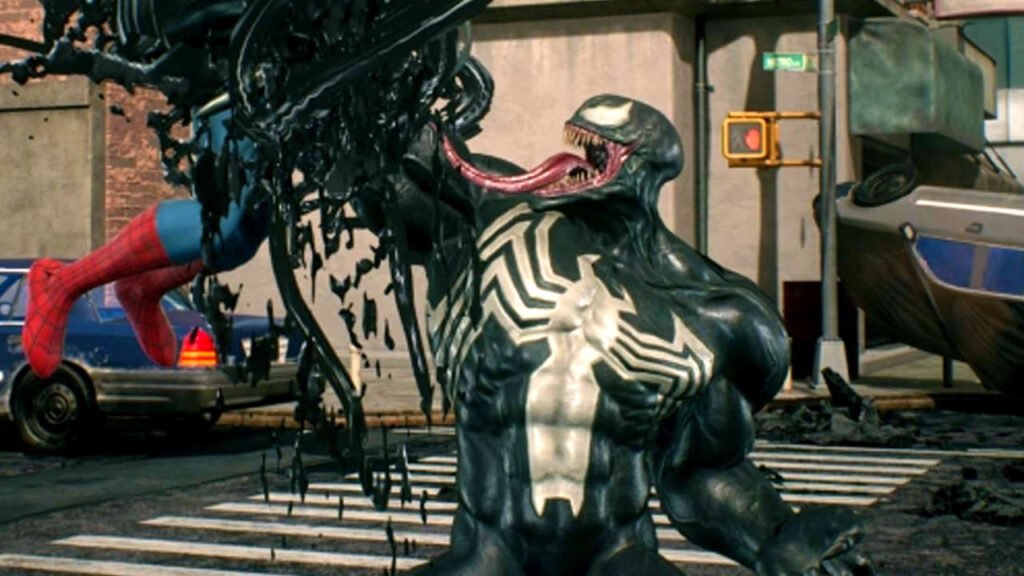
If you want a venom game experience that feels like it was built with Venom in mind, this is still one of the best answers.
What makes it special is that Venom isn’t just playable—he plays differently in a way that matters. He doesn’t feel like Spider-Man with a different outfit. He feels like an aggressive predator with his own rules.
In this game, Venom is all about feeding and maintaining mass. That might sound like a small mechanic, but it does something really important: it forces you to behave like Venom. You’re not just doing superhero chores. You’re hunting. You’re staying topped up. You’re managing a kind of hunger, and that hunger becomes part of your rhythm.
From a design perspective, it’s brilliant because it makes Venom powerful without making him “free.” You can be a wrecking ball, but you still have to keep moving, keep fighting, keep consuming to stay at peak strength. That’s exactly the kind of loop a true standalone Venom game should steal and modernize.
Spider-Man: Web of Shadows (Venom and Symbiote Mechanics Done the Fun Way)
This one is less of a pure “Venom game,” but it deserves a mention because it nails something important: symbiote combat fantasy.
The game’s signature idea is the shift between classic Spider-Man and the black suit, and it’s not just cosmetic. The symbiote style is more aggressive, heavier, and flashier. Even if you’re not strictly “playing Venom,” you’re engaging with the same kind of power set: tendrils, crowd control, brutality, and that feeling of giving in to something darker.
For Venom fans, it scratches the itch of what symbiote gameplay should feel like: fast transitions, escalating chaos, and a power curve that makes you feel dangerous.
If you’re thinking about what a modern venom game needs, Web of Shadows is a reminder that players love contrast. Venom is at his best when the game lets you feel the difference between restraint and release.
Marvel’s Spider-Man Series (The Modern Standard for Movement and Combat Foundations)
In terms of raw mechanics, the modern Spider-Man games set a foundation that basically begs for a Venom-focused spin. Even when Venom isn’t front-and-center as a playable character, you can see how easily the systems could support him: traversal, animation quality, combat readability, cinematic storytelling, and city-scale sandbox design.
What matters here is not “does it have Venom?” but “does it prove the engine and design language can carry a Venom experience?” And the answer is yes. The movement systems can be adapted into something heavier and more violent. The combat loop can be tuned to emphasize grappling, dismember-like takedowns (in a comic-friendly way), and fear-based crowd control.
A proper venom game would need modern polish like this: responsive controls, satisfying hit reactions, great sound design, and encounter design that doesn’t fall apart when you become a tank.
Fighting Games and Team Games (Venom as a Moveset, Not a Story)
Venom has also appeared in various fighting games and team-based Marvel titles over the years. These aren’t “venom game” experiences in the story sense, but they often deliver the most accurate version of Venom’s combat identity: brutal normals, stretchy grabs, ambush angles, and that sense of violence packed into animation.
If you want to understand Venom as a pure combat kit, these games can be surprisingly educational. They show what parts of Venom translate cleanly into mechanics: tongue grabs, tendril slams, armored approaches, and punishment tools that make opponents feel trapped.
The downside is obvious: you’re not getting the narrative duality, the city sandbox, or the predator fantasy. But for players who love the character’s physicality, these appearances keep the flame alive.
The Best Games Where Venom Is a Major Presence (Even When You Don’t Play Him Much)
Sometimes the best Venom experiences are the ones where you fight him—because boss design forces developers to show off what makes him scary.
Boss Fights: Where Venom Feels Like a Horror Monster
A great Venom boss fight should feel like you’re dealing with something that doesn’t follow the usual rules. He shouldn’t just be “big enemy with lots of health.” He should pressure you psychologically: ambushes, disappearing into shadows, forcing you to respond to unpredictable attacks, punishing greed, and escalating when you think you’ve learned the pattern.
The best Venom encounters lean into his identity as a hunter. He doesn’t politely wait his turn. He interrupts. He counters. He grabs you mid-animation. He uses the environment.
When a game gets that right, it reminds you why fans want a venom game in the first place: because a character who makes a great boss can also make an incredible playable monster—if the developers balance him correctly.
What Makes a Great Venom Game (Mechanics That Actually Fit the Character)
Let’s talk about the fun part: if you were designing a venom game from scratch, what would it need to feel right?
1) Movement That Feels Like Weight, Not Just Speed
Venom should be able to traverse quickly, but not like Spider-Man. Spider-Man swings like a gymnast. Venom moves like a predator.
That means:
- Leaps that cover huge distance with heavy landings
- Wall-crawling that feels animalistic, not elegant
- Short bursts of speed and aggressive pounces
- Tendril-based pulling (yanking yourself to rooftops, dragging enemies to you)
A great venom game would make rooftops feel like hunting territory, not just a highway.
2) Combat Built Around Grappling, Control, and Chaos
Venom shouldn’t play like a standard brawler where you punch, dodge, and repeat. His identity is about control: grabbing, throwing, biting, pinning, and overwhelming.
A strong Venom combat system would emphasize:
- Grabs that chain into environmental kills or crowd control throws
- Tendril strikes that manipulate spacing (pulling enemies in, slamming groups away)
- Shape-shift weapons that change your role mid-fight (blades for single-target, hammers for armor breaks, whips for crowd control)
- A “fear factor” system where enemies behave differently once Venom gets going
If regular thugs fight you the same way they fight Spider-Man, it’s wrong. People should panic when Venom is in full flow.
3) A Hunger or Instinct System (But Done Tastefully)
Venom without hunger is like a werewolf without the moon. The need to feed, to sustain, to resist, is core to the fantasy.
But it can’t be annoying. Nobody wants to babysit a meter every 30 seconds.
The best version is a system that rewards aggression rather than punishing you for playing slowly. For example:
- Staying in combat builds “symbiote momentum”
- Finishing moves refill health or boost abilities
- Feeding or finishing enemies unlocks temporary mutations
- If you avoid combat too long, you’re not “dying,” you’re just losing your edge
This keeps the loop fun: the game doesn’t scold you, it tempts you.
4) Duality: You Need the Host to Matter
Venom is not just a monster suit. The host matters, whether that’s Eddie Brock, Flash Thompson, or another storyline.
A premium venom game would use that in gameplay:
- Dialogue choices that reflect the push-pull between host and symbiote
- Missions where restraint matters (protecting civilians, avoiding collateral damage)
- “Control shifts” where you temporarily become more savage or more heroic depending on choices
- Reputation systems where the city reacts to you differently
Not in a preachy way—more like a living-world reaction. If you act like a menace, expect consequences. If you act like a lethal protector, people still fear you, but maybe they also quietly want you around when things get ugly.
5) Enemy Design That Can Handle Venom’s Power
One reason Venom is hard to headline is that ordinary enemies don’t stand a chance. So a venom game needs a smart escalation plan.
Early game enemies can be street-level crime, but the game should quickly introduce threats that justify Venom’s toolkit:
- Symbiote hunters with sound-based weapons
- Fire-based units that force you to reposition
- Enemies that can restrain or separate the symbiote temporarily
- Bosses that fight dirty and exploit your weaknesses
The trick is making these counters feel fair. Players don’t want “we turned off your powers because plot.” They want to adapt. They want to feel like the game is challenging Venom, not nerfing him.
Beginner Tips: How to Approach Venom Gameplay (Even If You’re New)
If you’re jumping into a game where Venom is playable—even partially—the biggest mistake is trying to play him like Spider-Man or like a generic action hero.
Here’s the mindset shift that helps immediately.
First, think in terms of momentum. Venom excels when you keep pressure on enemies. Instead of backing off to reset, you usually want to press forward, chain grabs, and keep the fight messy. The character fantasy is domination, and the mechanics typically reward that.
Second, use the environment constantly. Venom is at his best when he’s throwing enemies into walls, slamming them off ledges, or using vertical space to isolate targets. Even if the game doesn’t explicitly tell you to, play like a monster who owns the room.
Third, learn your “gap closers.” In almost every Venom-like moveset, there’s a way to close distance fast—leap, pull, pounce, tongue grab, tendril dash. Master that and combat stops feeling like trading hits and starts feeling like hunting.
Finally, don’t ignore defense just because you’re strong. Most games balance Venom by giving enemies tools that punish reckless aggression. The best Venom players look brutal but controlled. They pick moments to explode rather than swinging wildly 100% of the time.
Advanced Play: What Separates Good Venom Players From Great Ones
Once you’ve got the basics, the next level is understanding how to “conduct” a fight instead of just winning it.
A high-level Venom approach looks like this: you identify the most dangerous enemy (usually the one with fire, sound, stun, or ranged control), you delete them first, and then you turn the rest into resources. That’s an important concept—resources. In a good venom game design, weaker enemies are fuel: for health, for meter, for momentum, for intimidation.
Advanced play also means rotating your tools so combat stays dynamic. If you only use heavy slams, you’ll get bored. Venom is fun when you mix:
- Single-target brutality (quick elimination)
- Crowd control (room ownership)
- Mobility (constant reposition)
- Finishers (sustain and style)
And if the game has any kind of morality or reputation system, advanced players treat it like a sandbox. They experiment: “What happens if I terrify the city?” “What happens if I act like a protector?” Not because they want a trophy, but because Venom’s identity is flexible, and good games should let you feel that.
Storytelling: What a Venom Game Should Actually Be About
A lot of people assume a venom game should be simple: “You’re Venom, go smash villains.” That would be fun for an hour. A great game needs a core story engine that can carry 15–30 hours without feeling like a repeated rampage.
The strongest Venom narratives usually focus on one of these arcs:
- Redemption: Can a monster be a protector without becoming the thing it hates?
- Addiction/control: The symbiote is power, but power has a price.
- Identity: Who’s driving—the host, the symbiote, or the “we” they become?
- Survival: Hunters, corporations, and superpowered rivals closing in.
If you combine that with a city that reacts, you get something with real weight. Imagine finishing a mission in a way that saves people but terrifies witnesses. You “did the right thing,” but the city still steps back from you. That’s Venom. That’s the emotional flavor a proper venom game should chase.
The Dream: What a Standalone Venom Game Could Look Like (A Realistic Blueprint)
Let’s put it together into something concrete—because “make it good” isn’t helpful.
A modern standalone venom game would probably thrive with:
- A semi-open world city (dense, vertical, reactive)
- A combat system centered on grapples, tendrils, and shape-shifting weapons
- A momentum/hunger meter that rewards aggression and style
- Mission variety: hunts, rescues, infiltrations, boss battles, moral dilemmas
- A skill tree that branches into “Lethal Protector” vs “Living Nightmare” playstyles
- Enemies that scale from street crime to anti-symbiote task forces to supervillains
The key is that “choice” shouldn’t just be dialogue. It should be gameplay expression. Do you incapacitate, or do you brutalize? Do you protect quietly, or do you terrify loudly? Both should be viable, with different consequences.
And if I’m being honest, the biggest thing it needs is commitment. Venom can’t feel like a side mode. The whole game has to be built around the idea that you are not a traditional superhero—and the world should respond accordingly.
Common Mistakes Games Make With Venom (And What You Should Watch Out For)
When players feel disappointed by a venom game appearance, it’s usually for predictable reasons.
One common mistake is making Venom too slow and clunky. Yes, he’s heavy—but he’s not a lumbering zombie. He’s fast when he wants to be, and he should be terrifyingly quick in short bursts.
Another mistake is making his attacks feel like generic “big punches.” Venom’s uniqueness is in the symbiote’s versatility: tendrils, grabs, morphing, bite attacks, unpredictable angles. If those aren’t present, the character feels watered down.
A third mistake is overusing scripted sequences. Cinematic moments are great, but Venom is all about player-driven chaos. If every cool thing is a cutscene, you’re not playing Venom—you’re watching him.
And finally, some games forget the personality. Venom should have presence: menace, humor, rage, and that strange “we” voice dynamic. Even if the story is simple, the character should feel alive.
Conclusion: How to Get the Most Out of Any Venom Game Experience
A “venom game” isn’t just about seeing the character on-screen. It’s about feeling the fantasy: hunting across rooftops, overwhelming enemies with controlled brutality, balancing power with consequences, and inhabiting that odd, iconic dual identity of host and symbiote.
If you want the most satisfying Venom experiences right now, focus on games where Venom is truly playable or where symbiote mechanics are central—not just cameo appearances. Pay attention to how the best versions handle momentum, feeding/sustain loops, and combat that prioritizes grappling and fear. And when you’re playing, don’t approach Venom like a normal brawler. Play like a predator: close distance fast, control the room, and keep your power curve rolling.
The good news is that Venom as a game concept is stronger than ever. Players clearly want it. The design blueprint is basically sitting there waiting. All it takes is a developer willing to commit to the one thing Venom has always been best at: going all in.