
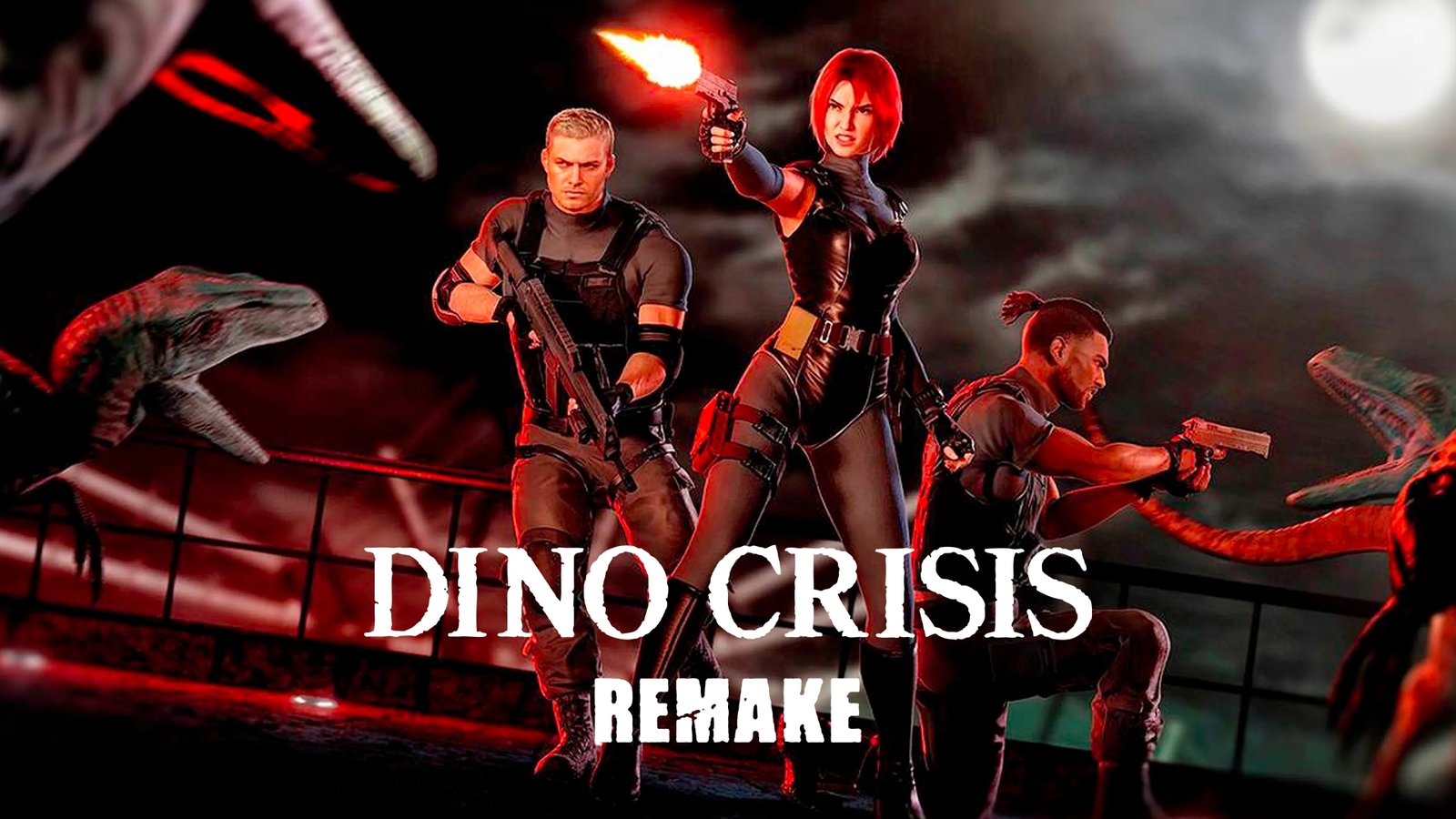
If you were holding a PlayStation controller in 1999, you likely remember the exact moment your heart stopped. You were creeping through the sterile, metallic corridors of a mysterious research facility, the ambient hum of machinery suddenly pierced by a heavy, rhythmic thudding. Then, a massive Tyrannosaurus Rex smashed through the wall, shattering the illusion of safety and redefining what a horror game could be. That was the magic of the original game, and it is exactly why the conversation around a potential Dino Crisis remake continues to dominate survival horror forums and gaming communities today.
Capcom has spent the last several years masterfully resurrecting its classic Resident Evil franchise, proving that they know exactly how to modernize retro masterpieces without losing their original soul. Naturally, fans have turned their hungry eyes toward Ibis Island, demanding that Regina and her prehistoric nightmare get the same premium treatment. In this comprehensive guide, we are going to break down everything you need to know about the Dino Crisis remake concept, what a modernized version would look like, how the gameplay mechanics must evolve, and why this project is the next logical step for the survival horror genre.
Why a Dino Crisis Remake is the Next Logical Step for Capcom
To understand why a modern reimagining is so heavily desired, we have to look at the current landscape of Capcom’s development strategy and the enduring legacy of the original 1999 masterpiece.
The Legacy of the Original 1999 Masterpiece
Directed by Shinji Mikami, the original game was initially pitched as “Resident Evil with dinosaurs,” but it quickly evolved into something entirely unique. It pioneered the “panic horror” subgenre. Unlike the slow, shambling zombies of Raccoon City, the velociraptors in this game were fast, aggressive, and capable of opening doors. The game forced players into a state of constant, high-stakes anxiety. Regina, the game’s fiercely competent protagonist, became an instant icon, navigating a labyrinthine facility filled with complex keycard puzzles, branching narrative paths, and some of the most tense resource management in gaming history. The foundation is already flawless; it just needs a modern coat of paint.
Capitalizing on the Resident Evil Remake Success
Capcom’s RE Engine has proven to be an absolute powerhouse for horror. The critically acclaimed reimaginings of Resident Evil 2, 3, and 4 demonstrated that the developer knows how to translate fixed-camera, tank-control classics into fluid, over-the-shoulder thrillers. The financial and critical success of these titles has given Capcom the confidence and the technological framework to tackle their other dormant IPs. A Dino Crisis remake would not just be a nostalgic cash grab; it would be a strategic expansion of their horror portfolio, capturing both veteran fans and a brand-new generation of players who missed the PlayStation 1 era.
What We Expect from a Modern Dino Crisis Remake
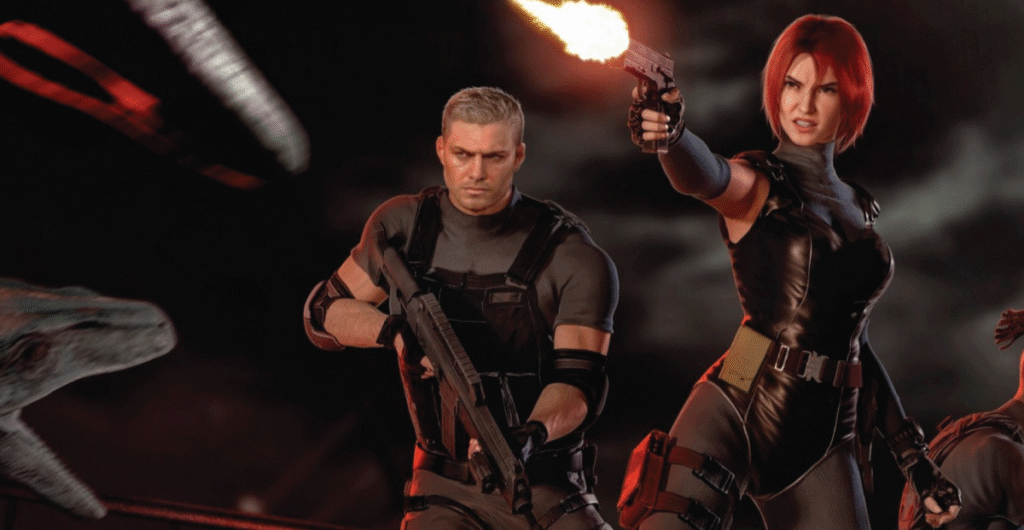
When translating a twenty-five-year-old game to modern hardware, developers have to make crucial decisions about perspective, controls, and engine capabilities. Here is what a contemporary version must deliver to meet modern standards.
Over-the-Shoulder Camera and Modern Controls
The fixed camera angles of 1999 created brilliant cinematic tension, but they are a relic of the past. A remake must fully embrace the tight, over-the-shoulder third-person perspective. This shift fundamentally changes how players interact with the environment, making aiming more intuitive and exploration more immersive. However, the developers must ensure that the camera does not become a hindrance in tight corridors. Implementing a dynamic camera system that pulls in slightly during narrow hallway sequences will maintain the claustrophobia of the original Ibis Island facility while keeping the gameplay buttery smooth.
Upgrading the RE Engine for Prehistoric Terror
The RE Engine is famous for its photorealistic character models and stunning lighting, but a Dino Crisis remake would require pushing the engine to handle massive, highly detailed creature models. The T-Rex needs to feel impossibly huge, with every scar, scale, and muscle twitch rendered in breathtaking detail. Furthermore, the engine’s particle effects and physics would be perfect for environmental destruction. Imagine the T-Rex not just walking through a door, but dynamically tearing the metallic doorframe apart, sending sparks and debris flying across the room in real-time. Regina’s iconic red hair and tactical gear would also benefit immensely from the engine’s advanced cloth and hair physics.
Rethinking Ibis Island: Level Design and Atmosphere
The original game’s level design was essentially a giant, interconnected puzzle box. A remake should retain the interconnected map structure—similar to the Raccoon City Police Department—but ground the aesthetic in reality. The original featured brightly colored keycards and abstract crystal locks. A modern take should redesign these puzzles to feel like authentic security protocols of a top-secret military research facility. The atmosphere must heavily rely on industrial decay, flickering fluorescent lights, and the terrifying contrast between sterile laboratories and the bloody, primal chaos brought by the dinosaurs.
Practical Insights: How Survival Horror Mechanics Must Evolve
Modernizing a classic is not just about better graphics; it is about updating the underlying mechanics to respect the player’s time while maintaining the core tension.
Balancing Resource Management and Action
The original game was notoriously stingy with ammunition and healing supplies. While resource scarcity is the lifeblood of survival horror, modern players have a lower tolerance for artificial difficulty. The remake should implement a dynamic resource distribution system. If the game detects that a player is struggling and dying repeatedly in a specific sector, it could subtly increase the drop rate of handgun ammo or hemostats in nearby lockers. This keeps the tension high without leading to frustrating, unavoidable game overs. Additionally, crafting mechanics, which were absent in the first game but present in the sequel, could be introduced in a limited capacity, allowing players to combine herbs or create specialized tranquilizer darts.
Enemy AI and Dinosaur Behavior
This is where a remake can truly shine. The dinosaurs should not just be damage sponges; they need to act like actual predators. Velociraptors should hunt in packs, utilizing flanking maneuvers and communicating with each other through terrifying, guttural clicks. If you shoot a raptor in the leg, it should limp and change its attack pattern. The T-Rex, acting as the game’s primary stalker enemy, should have an advanced AI that tracks the player’s noise and scent. If you fire an unsuppressed weapon, the T-Rex should immediately begin moving toward your location, forcing you to weigh the cost of using your best ammo against the risk of drawing the apex predator.
Examples of Modernized Encounters
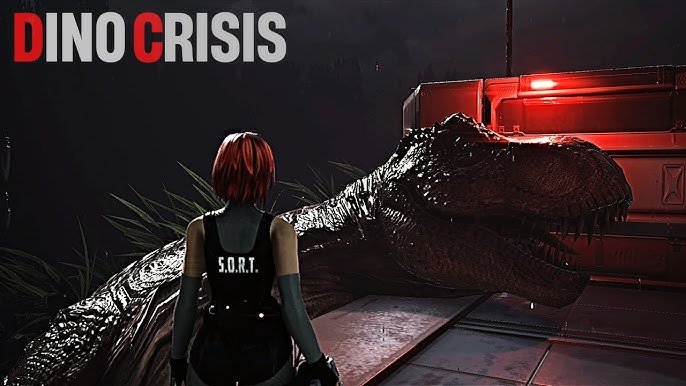
To truly understand the potential of a Dino Crisis remake, let us look at how a specific, iconic moment from the original could be reimagined for today’s hardware.
Consider the first major T-Rex encounter in the original game, which took place in a relatively small, enclosed space. In a modern remake, this encounter should be expanded into a multi-stage, environmental puzzle. Imagine creeping into a massive, multi-level pharmaceutical storage warehouse. The T-Rex is actively patrolling the ground floor. You need to retrieve a specific chemical compound from the upper catwalks.
Instead of a simple scripted event, the T-Rex would use its incredible sense of smell and hearing. You must walk slowly on the metal grating to avoid making noise. If you accidentally knock over a glass beaker, the T-Rex snaps its massive head toward your position and lets out a deafening roar that shakes the camera. You then have to use a distraction mechanic, perhaps throwing a flare or firing a single shot at a distant fuel drum, to lure the beast away from the staircase. When it finally spots you, the chase sequence begins, utilizing the over-the-shoulder camera to create a frantic, terrifying sprint through collapsing shelving units as the dinosaur tears the environment apart right behind you. This transforms a static, scripted scare into a dynamic, heart-pounding gameplay loop.
Expert Tips for Surviving the Original While We Wait
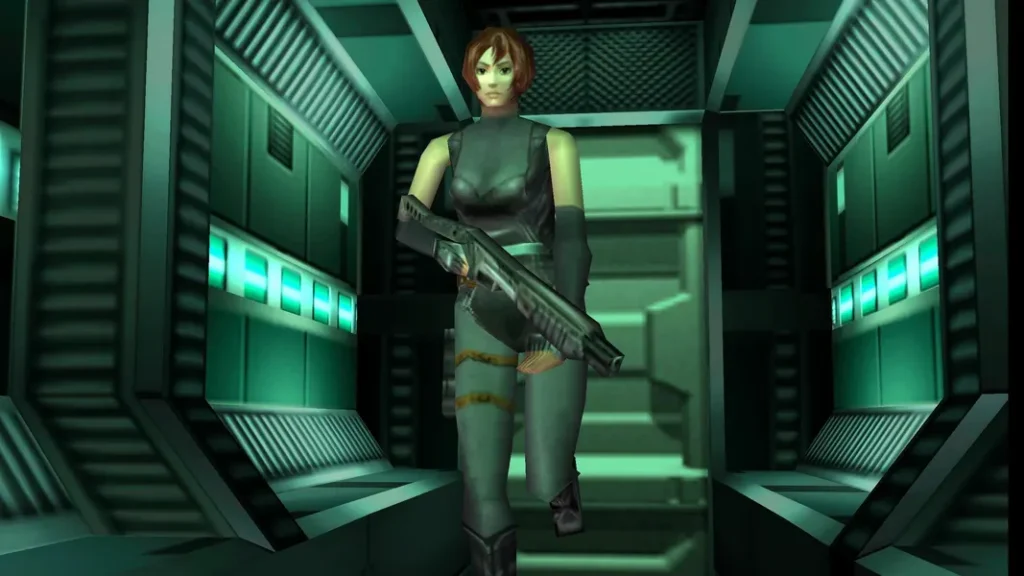
Since an official release date for a remake remains unconfirmed, many fans are returning to the 1999 classic. Here are some expert strategies to help you conquer Ibis Island on modern setups.
First, master the art of the manual dodge. The original game featured a dedicated dodge mechanic that is incredibly powerful if timed correctly. Practice stepping into a raptor’s lunge and pressing the dodge button at the last possible millisecond. A successful dodge not only prevents damage but briefly stuns the enemy, giving you a free shot.
Second, optimize your inventory management. The game uses a grid-based inventory system. Always combine your handgun ammo into single slots to save space, and never hoard unnecessary key items. If you have used a D.D.K. (Doctor’s Degree Key) disk to unlock a door, drop it in a nearby item box immediately.
Third, when playing on PC via emulation or legacy ports, use a modern controller wrapper to map the tank controls to the analog sticks. While purists prefer the original digital pad input, mapping the turning to the left stick and movement to the right stick (or using a dedicated modern control scheme if available via fan patches) will drastically reduce the friction of revisiting the game today.
Common Mistakes Fans Make When Discussing the Remake
When a community passionately campaigns for a game, misconceptions tend to spread. Let us clear up a few common errors in the discourse surrounding this project.
The biggest mistake is assuming the remake should follow the gameplay style of Dino Crisis 2. The second game shifted heavily into arcade-style action, rewarding players for consecutive kills and featuring minimal horror. A true remake of the first game must reject this action-heavy approach and return to its roots as a tense, methodical survival horror experience. Action has its place, but panic and vulnerability are the core pillars of the franchise.
Another common misconception is expecting an open-world design. Some fans suggest that modernizing the game means turning Ibis Island into a massive, seamless open world. This would completely destroy the carefully crafted pacing and claustrophobia of the original. The remake needs to remain a tightly curated, semi-linear experience with an interconnected map, much like the Resident Evil remakes.
Finally, many fans mistakenly believe that Capcom has completely abandoned the IP. While it has been dormant for a long time, Capcom frequently registers trademarks and surveys fans about their classic properties. The lack of an official announcement does not mean the project is dead; it simply means the development teams have been heavily focused on completing the Resident Evil remake trilogy and launching new mainline entries.
Frequently Asked Questions About the Dino Crisis Remake
Is the Dino Crisis remake officially announced by Capcom?
As of right now, Capcom has not officially announced a Dino Crisis remake. However, industry insiders and reliable leakers have frequently hinted that the project is either in early development or being actively pitched internally. Fans should keep an eye on major gaming showcases for a potential reveal.
Will the remake feature the original voice cast?
This is highly debated in the community. While fans love the original 1999 voice lines, modern remakes typically recast characters to provide more nuanced, motion-captured performances. It is likely Capcom would hire a new cast to deliver a more grounded and realistic script, though they might include the original voices as an unlockable bonus.
What dinosaurs will be featured in the remake?
The remake will undoubtedly feature the core roster from the first game, including the Velociraptor, Pteranodon, Therizinosaurus, and the iconic Tyrannosaurus Rex. Developers might also take the opportunity to add a few new species to surprise veteran players who already know the original game inside and out.
Will the multiple endings and branching paths return?
Yes, the branching narrative was a defining feature of the original. Depending on the player’s choices regarding which team members to trust and which colored keys to use, the story diverges significantly. A remake would almost certainly retain this feature, potentially expanding on the alternate routes to offer even more replay value.
Conclusion: The Future of Prehistoric Survival Horror
The demand for a Dino Crisis remake is not just born out of blind nostalgia; it is rooted in a genuine desire to see one of the most innovative survival horror games of all time reach its full, modernized potential. The original game pushed the boundaries of the PlayStation 1, delivering a terrifying, fast-paced, and mechanically deep experience that still holds up conceptually today. By leveraging the power of the RE Engine, modernizing the camera and controls, and implementing advanced predator AI, Capcom has the opportunity to create a masterpiece that terrifies a whole new generation.
While we wait for an official announcement, the legacy of Regina and the haunting halls of Ibis Island continue to live on in the hearts of horror fans. The blueprint for a perfect remake already exists, built on the foundation of Capcom’s recent critical successes and the timeless design of the 1999 original. When the day finally comes and we hear that heavy, rhythmic thudding echoing through our surround sound headsets once again, we will know that the king of panic horror has finally returned to claim its throne. Until then, keep your ammo counted, listen for the raptor clicks, and never, ever turn your back on the T-Rex.